
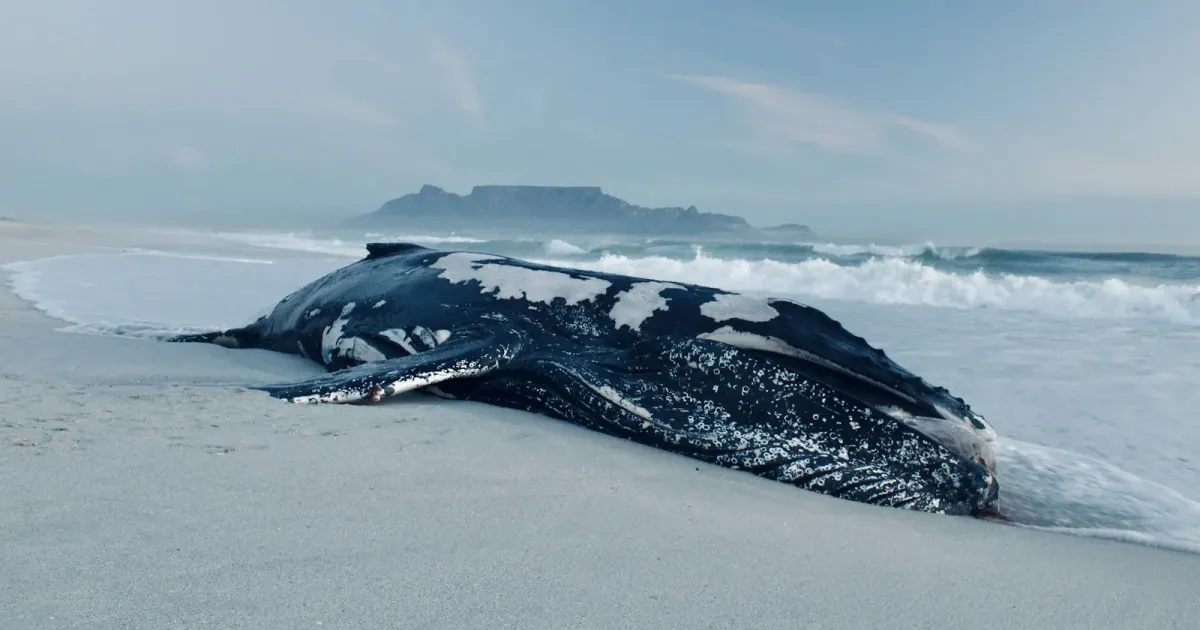
Why do whales explode? Only after they die, and only under the right conditions. A living whale can't blow up. A dead one, left to rot, can swell like a balloon until something gives.
The few famous cases, like Oregon's 1970 exploding whale and the 2004 sperm whale that burst on a street in Taiwan, gave whales a reputation they don't quite deserve. Most dead whales slowly deflate. But the gas pressure is real, and it's one reason officials tell people to stay away from beached carcasses.
Quick facts
Rotting whale organs give off methane, ammonia and hydrogen sulfide, according to National Geographic Education (2014).
On November 12, 1970, Oregon highway crews blew up a 45-foot, 8-ton sperm whale near Florence with half a ton of dynamite (Oregon Encyclopedia).
Guinness World Records lists a 17-meter, 50-tonne sperm whale in Tainan, Taiwan, as the largest mammal to explode naturally, on January 26, 2004.
The US stranding network that handles dead whales has more than 120 partner groups, says NOAA Fisheries.
A whale that sinks to the seafloor can feed other animals for more than 100 years (National Geographic Education).
Why do whales explode when they die?
A dead whale explodes when gas from decay builds up faster than it can escape. The process starts as soon as the heart stops.
Bacteria and enzymes already inside the body begin breaking down the internal organs and the stomach contents. National Geographic Education describes the gases they release as methane, ammonia and hydrogen sulfide, the last one being the source of the rotten-egg smell. Every animal bloats this way after death. Whales are just big enough for the results to be dramatic.
As the gas collects in the body cavity, the carcass swells. When a blue whale washed up in Trout River, Newfoundland, in 2014, Smithsonian Magazine reported that it looked bloated to more than twice its normal size. A big enough gap between the pressure inside and the strength of the skin can end in a rupture.
How blubber traps gas and heat
Blubber matters because it seals the gas in and keeps the heat of decay from escaping. In a 2014 National Geographic article, marine biologist Andrew David Thaler explained that whale skin and blubber are tough enough to hold the pressure for a long time.
In life, blubber is insulation. Whale and Dolphin Conservation explains that this fat layer helps whales stay warm in cold water. After death, the same layer keeps heat inside the carcass. Rotting tissue produces its own heat, too. At a humpback whale necropsy (an animal autopsy) on the Oregon coast, NOAA Fisheries staff saw steam rising from the carcass as decomposition warmed it.
So a beached whale ends up as a warm, sealed bag of rotting tissue that keeps making gas, with very few ways for that gas to get out.
Do whales explode on their own?
Whales rarely explode on their own; most explosions start when people interfere. Thaler told National Geographic that blasts usually follow someone climbing on, moving or cutting into the carcass.
Lawson made the same point about Trout River. The risk, he said, would come from someone cutting into the side to see what happens. He also warned Smithsonian that the skin of a rotting whale weakens, so a person climbing on top could fall into a cavity full of liquefied tissue.
Real cases fit this pattern. In 2013, a sperm whale in the Faroe Islands burst while a biologist was cutting it open, Smithsonian reported. The Taiwan whale described below exploded while it was being trucked through a city.
The exploding whale of Florence, Oregon (1970)
The most famous exploding whale was blown up on purpose. On November 9, 1970, a 45-foot sperm whale washed ashore near Florence, Oregon. The Oregon Encyclopedia puts its weight at about 8 tons. The job of getting rid of it fell to the Oregon State Highway Division, now the Oregon Department of Transportation.
Assistant district highway engineer George Thornton consulted Navy and munitions experts and settled on dynamite. On November 12, crews set off half a ton of explosives, which Smithsonian describes as 20 cases of dynamite.
It didn't go to plan. The Oregon Encyclopedia describes a column of sand and whale about 100 feet high. Spectators stood about a quarter mile back, a distance they thought was safe. OPB reports that a three-foot chunk of blubber fell from the sky and smashed the roof of a car. No one reported an injury from the blast, but people said the smell clung to their clothes for days. Crews still had to gather up the remaining chunks of whale and bury them.
KATU reporter Paul Linnman's news film of the blast became, by the Oregon Historical Society's estimate, one of the first viral videos, with around 350 million views. Florence later named a recreation area Exploding Whale Memorial Park, OPB reports.
Oregon learned from it. When 41 sperm whales stranded near Florence in 1979, they were buried, and the Oregon Encyclopedia says the state's practice now is to bury beached whales in the sand.
The Taiwan sperm whale explosion (2004)
The best-known natural whale explosion happened in Tainan, Taiwan, in 2004. A male sperm whale had stranded and died on the coast of Yunlin County on January 17, the Johns Hopkins News-Letter reported. It took more than 13 hours, three cranes and 50 workers to load it onto a truck.
The whale was headed for National Cheng Kung University, where scientists planned a necropsy, NBC News reported. On January 26, as the truck passed through Tainan City, gas pressure from inside the rotting body burst it open. Blood and organs spilled across the road, onto storefronts, cars and bystanders.
Size figures vary by source. Guinness gives 17 meters and 50 tonnes, while NBC reported 56 feet and 60 tons. Either way, it remains the largest animal on record to explode from its own decay.
Why is a dead whale dangerous, and what should you do?
A dead whale is dangerous because it can burst, its weakened skin can give way under a person's weight, and it may carry diseases that spread to people and pets. If you find one, keep back and report it.
NOAA Fisheries tells the public not to touch stranded marine mammals and to leave them to trained responders. Here's what to do:
Stay well back. Oregon State University's stranding network advises at least 50 yards for marine mammals on the beach.
Keep dogs leashed and away from the carcass.
Call your regional stranding hotline. NOAA lists numbers by region, such as (866) 767-6114 for the West Coast and (866) 755-6622 for the Greater Atlantic.
Report the date, time, location, number of animals, whether they're alive or dead, and the species if you know it.
Don't climb on it, cut it or take parts. Marine mammals are protected by federal law, and handling them without authorization is illegal.
How do authorities get rid of a dead whale?
Authorities usually bury a whale on the beach, tow it out to sea, haul it away in pieces or leave it to rot where it lies. Explosives are no longer the standard choice.
A 2022 NOAA best-practices report on carcass disposal lists these options:
Leaving it to decompose naturally
Burying it above the high tide line
Towing it offshore, sometimes weighted so it sinks
Taking it to a licensed landfill or rendering plant
Incineration or composting
The report notes that gas buildup in large carcasses can become a safety concern. It recommends piercing the body cavity, where that's feasible, so the gas can vent in a controlled way. Burning a whale is harder than it sounds, because the oily blubber causes problems for incinerators.
Who decides depends on where the whale lands. NOAA says the choice after a necropsy is usually up to the landowner. At that Oregon humpback necropsy, state park managers let the humpback decompose on the beach, where scavengers would recycle its nutrients. A whale that dies at sea and sinks becomes a "whale fall," a slow feast for deep-sea life.
Frequently asked questions
Do whales explode when they die?
Whales don't explode at the moment of death. A dead whale can burst days later if decay gases build up inside the carcass, but most dead whales slowly deflate as the gas escapes.
What happened with the exploding whale in Oregon?
In November 1970, the Oregon State Highway Division used half a ton of dynamite on a dead 45-foot sperm whale near Florence. Chunks of blubber rained down on spectators, one smashed a car roof, and the leftover whale still had to be buried.
What gas makes a dead whale explode?
Bacteria breaking down a dead whale's organs produce gases including methane, ammonia and hydrogen sulfide. The whale's thick blubber and tough skin trap the gas until pressure builds.
Has a whale ever exploded on its own?
Yes. In January 2004, a dead sperm whale burst open while being trucked through Tainan, Taiwan, and Guinness lists it as the largest mammal to explode naturally. Even then, the whale was being moved, and moving a carcass raises the risk.
Is it safe to touch a dead whale on the beach?
Touching a dead whale is not safe and, in the US, is illegal without authorization. A dead whale can carry diseases, its skin may tear under your weight, and NOAA asks people to call a stranding hotline instead.
How long does a dead whale take to explode?
There's no fixed timeline for a dead whale to explode, and most never do. Pressure builds over days as the carcass rots, and the risk rises sharply if someone cuts or moves it.
For more strange animal science, see why bees die after stinging, why bats hang upside down and how to tell an alligator from a crocodile, or browse our ocean life articles.
Sources
Florence Whale Explosion, Oregon Encyclopedia (Oregon Historical Society)
It was like a blubber snowstorm: Why Oregon blew up a whale in 1970, OPB
The 50th Anniversary of Blasted Blubber: A Conversation with Paul Linnman, Oregon Historical Society
Largest mammal to explode, natural, Guinness World Records
Thar she blows! Dead whale explodes, NBC News
Whale explodes on Taiwan street, Johns Hopkins News-Letter
Why Does a Decomposing Whale Explode?, National Geographic
Beached. Blue. Bloated., National Geographic Education
This Dead Whale Could Explode at Any Minute, Smithsonian Magazine
Dead whale may explode in Canada town, official warns, CBS News
How does blubber keep whales warm?, Whale and Dolphin Conservation
A Whale of a Story: Necropsy Reveals the Health of Species and the Ocean, NOAA Fisheries
National Marine Mammal Stranding Response Network, NOAA Fisheries
Marine Mammal Carcass Disposal: Policies and Best Practices, NOAA Fisheries (2022)
What To Do If You Find a Marine Mammal Ashore in Oregon, Oregon State University Marine Mammal Institute



Comments