
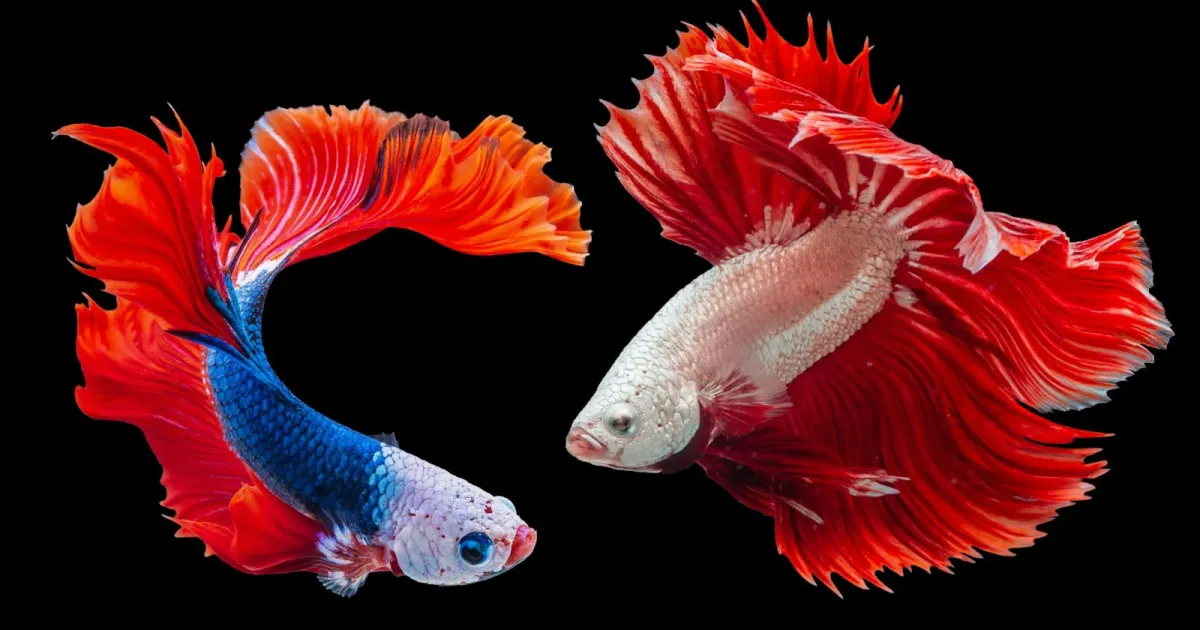
Look into a fish tank at night and you'll often see the fish hanging almost still, maybe near the bottom, fins barely moving. They haven't died. They're resting. So do fish sleep? For most species the answer is yes, and scientists have found surprising similarities to our own sleep.
The tricky part is that fish don't close their eyes or lie in bed. Researchers have had to look at behavior, metabolism and brain activity instead. Here's what that work shows.
Quick facts
Most fish lack eyelids, though sharks have them, according to NOAA's National Ocean Service.
A 2019 Stanford Medicine study in Nature found two zebrafish sleep states resembling slow-wave and REM sleep.
Those findings suggest the brain signatures of sleep evolved at least 450 million years ago.
Some parrotfish wrap themselves in a mucus cocoon at night that takes under an hour to make (National Geographic).
Draughtsboard sharks kept their eyes open about 38% of the time while sleeping at night, a 2022 Biology Letters study found.
Do fish sleep like humans?
Fish sleep, but not in quite the same way land mammals do. NOAA says fish reduce their activity and metabolism while staying alert to danger, and that this rest may do the same restorative job sleep does for people.
So scientists don't judge fish sleep by closed eyes. They look for a few signs that show up across the animal kingdom:
Long stretches without moving, often in a favorite spot
A slower heart rate and lower oxygen use
Weaker reactions to things that would normally startle the animal
A daily rhythm, with rest at roughly the same time each day or night
NOAA notes that many fish keep regular day and night cycles. Some are active by day and rest at night. Others do the reverse.
What happens in a sleeping fish's brain?
In zebrafish at least, the sleeping brain looks a lot like ours. A team led by Philippe Mourrain and Louis Leung at Stanford Medicine published the work in Nature on July 10, 2019.
The researchers built a special light-sheet microscope, which lights up a thin slice of tissue at a time. It let them image the whole fish down to single cells. They also tracked heart rate, eye movement and muscle tone, a fish version of polysomnography, the overnight sleep test used on people. They found two distinct states. One, which they called slow bursting sleep, resembles our slow-wave or deep sleep. The other, propagating wave sleep, resembles REM (rapid eye movement) sleep.
Mourrain told Stanford that sleeping zebrafish lose muscle tone, their heartbeat drops and they stop responding to stimuli. The main difference he noted is that the fish don't move their eyes rapidly during the REM-like stage. Since fish and land animals split from a shared ancestor long ago, the team concluded these sleep patterns are at least 450 million years old.
Not every fish sleeps the same amount. A 2018 Florida Atlantic University study in eLife looked at blind Mexican cavefish, which live in total darkness. These fish have evolved to sleep much less than their river-dwelling relatives. Alex Keene's team linked the difference to higher levels of hypocretin, a brain chemical tied to wakefulness and to narcolepsy in humans.
Do fish sleep with their eyes open?
Yes, most fish sleep with their eyes open because they have no eyelids to close. Sharks are the exception NOAA names, and even they don't always shut their eyes.
In 2022, Craig Radford and colleagues from New Zealand and Australian universities studied seven draughtsboard sharks (Cephaloscyllium isabellum), a kind of carpet shark. They counted a shark as asleep if it stayed still for at least 5 minutes. Sleeping sharks used less oxygen than resting ones, which points to the same energy savings sleep gives other animals.
The eyes were less reliable. Sleeping sharks often had their eyes closed, but at night they kept them open about 38% of the time. The authors think eye closure may depend more on light than on sleep itself. Body posture was a better clue. A sleeping shark lay flat on the bottom, while a resting but awake shark stayed propped up on its pectoral fins.
This species can lie still because it can pump water over its gills. The University of Auckland points out that some other sharks have to keep swimming to breathe. How those sharks rest is still an open question.
How do fish sleep, and where?
Fish sleep by finding a safe place and slowing down, and each species has its own habits. NOAA lists a few common strategies: floating in place, wedging into mud or coral, or settling into a nest.
Some fish go further:
Pacific sand lance burrow into the sand to rest, save energy and hide from predators, according to NOAA.
Parrotfish on coral reefs tuck into crevices, and some species surround their whole body with a clear bubble of mucus.
Goldfish hover motionless an inch or two above the bottom, heads tipped slightly down, PetMD reports.
Draughtsboard sharks lie flat on the seafloor.
If you're curious how other animals pick odd sleeping positions, our post on why bats hang upside down covers a very different solution to the same problem.
Why do parrotfish sleep in a mucus bubble?
Parrotfish make a mucus cocoon to keep blood-sucking parasites off while they sleep. Alexandra Grutter of the University of Queensland tested this with daisy parrotfish from the Great Barrier Reef, in work published in Biology Letters.
The parasites are gnathiid isopods, small crustaceans that feed on fish blood at night when cleaner fish aren't working. Grutter carefully removed cocoons from some sleeping fish without waking them. When isopods were added to the tanks, only about 10% of cocooned fish were attacked, while almost all the unprotected fish were bitten.
Making the cocoon takes under an hour each night and uses about 2.5% of the fish's energy budget, National Geographic reported. Earlier ideas said the cocoon hid the fish's scent from predators like moray eels. Grutter's results pointed to parasites instead. For a very different eel story, see our post on how eels reproduce.
Do fish sleep at night?
Many fish sleep at night, but plenty of species rest during the day instead. NOAA notes that fish follow day and night cycles in both directions.
Zebrafish are diurnal, meaning active by day, which is one reason Stanford researchers like them. Louis Leung said that makes them a closer match to human body clocks than nocturnal mice. Draughtsboard sharks are the opposite. The shark team found they swim most at night, though they also slept during the day, and their metabolic rate dropped by a similar amount whenever they slept.
Big animals in the ocean have their own quirks around rest and the body. For a strange example, see why whales explode. And if you want to compare fish with a famously sleepy mammal, our piece on why cats sleep so much is a good contrast.
How can you tell if an aquarium fish is sleeping or sick?
A sleeping fish stays upright and calm, while a sick fish often floats on its side or swims strangely. PetMD's goldfish guide, by veterinarian Laurie Hess, describes healthy sleeping goldfish as slow, hovering near the bottom and sometimes a little paler than usual. Their color returns once they wake up.
When to see a vet
Call a vet who treats fish if you notice any of these signs:
Floating sideways or upside down
Swimming in circles, jerks or other unusual patterns
Signs of swim bladder problems, like trouble staying level in the water
A fish that stays "asleep" through feeding time or lights coming on, and doesn't respond when you approach
PetMD notes that steady rest supports a fish's metabolism, energy and immune system. A fish that seems to rest all the time, day and night, is worth a closer look.
You'll find more sea and freshwater stories in our ocean life section.
Frequently asked questions
Do fish sleep?
Yes, most fish sleep, though fish sleep looks different from mammal sleep. Fish slow their movement and metabolism, rest in a safe spot and stay partly alert to danger, according to NOAA.
Do fish sleep with their eyes open?
Most fish sleep with their eyes open because they have no eyelids. Sharks have eyelids, but a 2022 study found sleeping draughtsboard sharks kept their eyes open about 38% of the time at night.
How do fish sleep?
Fish sleep by finding a sheltered spot and going still. Some float in place, some wedge into coral or mud, Pacific sand lance burrow into sand, and some parrotfish wrap themselves in a mucus cocoon.
Do fish sleep at night?
Many fish sleep at night, but not all of them. NOAA says some fish are active by day and rest at night, while others, like draughtsboard sharks, are most active after dark.
Do fish dream?
Nobody knows whether fish dream, because fish can't tell us what they experience. A 2019 Stanford study did find that zebrafish have a sleep state resembling human REM sleep, minus the rapid eye movements.
Do goldfish sleep?
Yes, goldfish sleep. A sleeping goldfish hovers still near the bottom of the tank, stays upright and may look slightly paler, according to vet-reviewed advice from PetMD.
Sources
Do fish sleep?, NOAA National Ocean Service
Neural sleep patterns emerged at least 450 million years ago, Stanford Medicine
Fish sleep like us, new research has found, Stanford Medicine
Sleepless in Latin America: Blind cavefish, extreme environments and insomnia, Florida Atlantic University via EurekAlert
Energy conservation characterizes sleep in sharks, Biology Letters (Kelly et al., 2022)
Sharks can sleep with eyes wide open, research shows, University of Auckland
Parrotfish sleep in a mosquito net made of mucus, National Geographic



Comments