
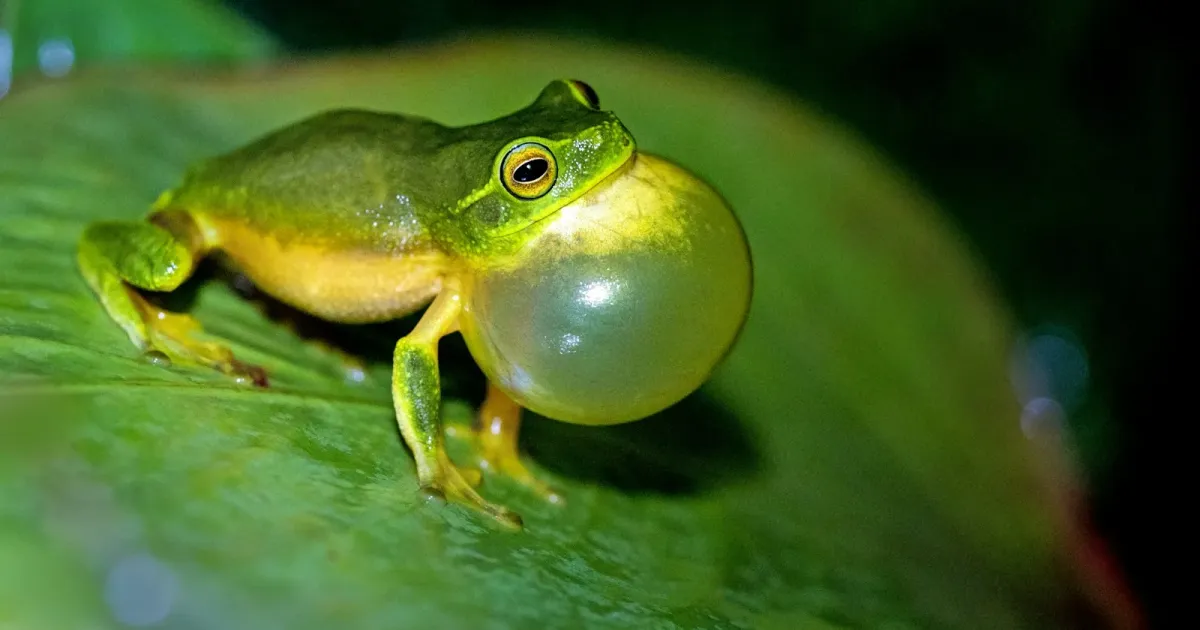
What do frogs eat? Mostly small animals that crawl, fly or wriggle past them. Adult frogs are hunters, and the bigger the frog, the bigger the menu.
Tadpoles live a different life. Most of them spend their early weeks scraping algae off rocks and plants. Then their bodies rebuild themselves, gut included, and the plant eater becomes a predator.
Below we cover wild frogs, tadpoles and pet frogs, and why each eats the way it does.
Quick facts
There are 7,812 known frog species, according to AmphibiaWeb at the University of California, Berkeley (February 2025 count).
Britannica says the great majority of frogs eat insects, other small arthropods or worms (Britannica).
The American bullfrog, North America's largest frog, can weigh up to 1.5 pounds and eats insects, mice, fish, birds and snakes (National Geographic).
Bullfrogs have even been recorded eating bats (Animal Diversity Web).
Frogs can pull their eyes down into the skull to help push food down the throat (Wikipedia: Frog).
What do frogs eat in the wild?
Wild frogs eat mostly small invertebrates (animals without backbones), such as insects, spiders, worms, slugs and snails. Larger frogs add vertebrates to the list.
Britannica's entry on frogs and toads says the great majority eat insects, other small arthropods or worms. Arthropods are the jointed-leg crowd: insects, spiders, mites and crabs. Some larger species eat other frogs and small rodents.
Garden frogs are slug and snail hunters too. The Woodland Trust, a UK conservation charity, lists flies, moths, snails, slugs and worms as common prey for small frogs. It also warns gardeners that slug pellets harm frogs. A wild patch of native plants brings in the insects frogs need, so there's no reason to put out extra food.
Many of the insects frogs eat are the same pests people swat. Flies are a regular meal. If you've wondered how long those flies would last without frogs around, see how long flies live.
What do big frogs like bullfrogs eat?
Big frogs eat almost any animal they can fit in their mouths. The American bullfrog is the best known example in North America.
National Geographic describes bullfrogs as nocturnal ambush predators that eat insects, mice, fish, birds and snakes. Animal Diversity Web, run by the University of Michigan, adds worms, crustaceans, tadpoles and the eggs of fish, frogs and salamanders. Bullfrogs are cannibals too and will eat smaller bullfrogs. There are even records of bullfrogs eating bats.
Britannica notes reports of bullfrogs taking small turtles. A frog that can grow past 8 inches long has a wide mouth, and it uses all of it.
How do frogs catch and swallow their food?
Most frogs sit still, wait for prey to come close, then strike with a fast, sticky tongue. Some lunge with the whole body as well.
Animal Diversity Web calls the bullfrog's method "sit and wait." The frog stays motionless until something passes, then snaps it up with a rapid flick of the tongue. National Geographic adds that bullfrogs push off with their strong back legs, mouths wide open.
The tongue is the main tool. In most frogs it rests folded inside the mouth and shoots out at great speed. Frog saliva helps. Researchers describe it as a two-phase fluid. It turns runny under pressure and wraps around the insect. Then it thickens again to grip the prey as the tongue pulls back. Not every frog has a tongue, though. Some species just grab food with their jaws.
Swallowing is the odd part. Frogs can pull their eyeballs down through openings in the skull, and the eyes help shove food down the throat. A frog's eyes are part of its eating equipment.
Do frogs eat plants?
Adult frogs eat very few plants, though a few species do. Plant eating is much more common in tadpoles.
Almost all adult frogs are carnivores. One known exception is Xenohyla truncata, a Brazilian tree frog whose diet includes a large share of fruit, flowers and nectar. Other frogs swallow some plant material along with their prey, but it isn't their main food.
Frogs aren't the only animals that change diets as they grow. Many turtles start out eating bugs and slowly add greens, as we explain in what do turtles eat. Frogs go the other way.
What do tadpoles eat?
Most tadpoles are plant eaters that graze on algae and soft water plants. A few species eat meat, and some even eat each other.
Britannica says pond tadpoles feed on attached and floating vegetation, including algae. Stream tadpoles scrape the thin film of bacteria and algae that coats rocks. Some tadpoles that grow in small pools of water in trees eat insect larvae or frog eggs instead. Animal Diversity Web says bullfrog tadpoles mostly graze on aquatic plants.
When food runs short, tadpoles can turn on one another. The Woodland Trust notes that young tadpoles start on algae and later take plants and small insects, and that hungry tadpoles may eat each other.
Why do tadpoles switch from plants to meat?
Tadpoles switch because metamorphosis rebuilds their bodies for hunting. A plant diet needs a long gut, and a meat diet does not.
Britannica lists shortening of the intestine among the changes during metamorphosis. The tadpole also grows legs, loses its tail and develops a frog's wide mouth. By the end, the animal that grazed on algae is built to catch moving prey.
What do pet frogs eat?
Pet frogs eat live insects such as crickets, roaches and worms, with extra calcium and vitamins added. Large species can also have the occasional rodent.
The Merck Veterinary Manual, in a page reviewed by Natalie Antinoff, DVM, lists earthworms, bloodworms, fruit flies, mealworms and crickets as common foods for pet amphibians. Some species also eat live minnows or newborn mice.
Insects alone aren't a complete diet. Merck says most of them lack the right balance of calcium and phosphorus. Owners fix this two ways:
Gut loading: feeding the insects a calcium-rich diet for about 48 hours before the frog eats them.
Dusting: coating insects with powdered calcium or a multivitamin with vitamin D3.
PetMD's Pacman frog care sheet, reviewed by Maria Zayas, DVM, gives an example schedule. Juveniles eat gut-loaded insects daily. Adults eat one to two times a week, with frozen and thawed rodents every other week. PetMD advises against live rodents and suggests mealworms and waxworms only as treats.
When should you take a pet frog to a vet?
See an exotic animal vet if your frog stops eating, loses weight or shows changes in its skin, eyes or legs.
PetMD lists these warning signs for Pacman frogs:
Dry skin or eye discharge
Lethargy or loss of appetite
Red color on the legs and belly
Weight loss or sores in the mouth
Merck describes metabolic bone disease, a calcium problem, with signs such as a soft or bent lower jaw, broken bones and a curved spine. Vitamin A deficiency can cause swollen eyelids and "short tongue syndrome," where the tongue can't reach prey. Both link back to diet, which is why the supplements above matter. PetMD recommends a vet checkup once a year.
Frequently asked questions
What do frogs eat in a pond?
Pond frogs eat insects, worms, snails and slugs, and big pond frogs also eat fish, tadpoles and smaller frogs. Bullfrogs in ponds will take mice, birds and snakes. Pond tadpoles mostly graze on algae and water plants.
What do baby frogs eat?
Baby frogs start as tadpoles that eat mainly algae and soft plants. After metamorphosis, the young frog becomes a carnivore like its parents and hunts live prey. Some tadpole species are meat eaters or cannibals from the start.
Do frogs eat dead insects?
Frogs in the wild hunt live prey, using a sit-and-wait strike on anything that passes. Pet frog guides from PetMD and Merck are built around live insects, gut loaded and dusted with supplements. Frozen and thawed rodents are fed to large species such as Pacman frogs.
Can frogs eat fruit?
Most frogs don't eat fruit, since almost all adult frogs are carnivores. The Brazilian tree frog Xenohyla truncata is an exception that eats fruit, flowers and nectar. Pet frogs should get insects rather than fruit.
How often do frogs eat?
How often a frog eats depends on its age and species. PetMD says juvenile Pacman frogs eat daily and adults one to two times a week. Merck notes that pet amphibians overeat if food is always there.
Do frogs have teeth?
Most frogs have teeth in the upper jaw, while toads have none, according to the Merck Veterinary Manual. Frogs swallow their food whole, and their eyes help push it down.
Frogs end up on plenty of menus themselves. Foxes eat frogs, as covered in what do foxes eat. For two big ambush hunters of the reptile world, read alligator vs crocodile. More guides like this live in our reptiles and amphibians section.
Sources
AmphibiaWeb species counts, University of California, Berkeley
Anura: Natural history, Britannica
Tadpole, Britannica
American bullfrog, National Geographic
Lithobates catesbeianus (American bullfrog), Animal Diversity Web, University of Michigan
What do frogs eat?, Woodland Trust
Diet for amphibians, Merck Veterinary Manual
Nutritional diseases of amphibians, Merck Veterinary Manual
Introduction to amphibians, Merck Veterinary Manual
Pacman frog care sheet, PetMD (reviewed by Maria Zayas, DVM)
Frog, Wikipedia


Comments