
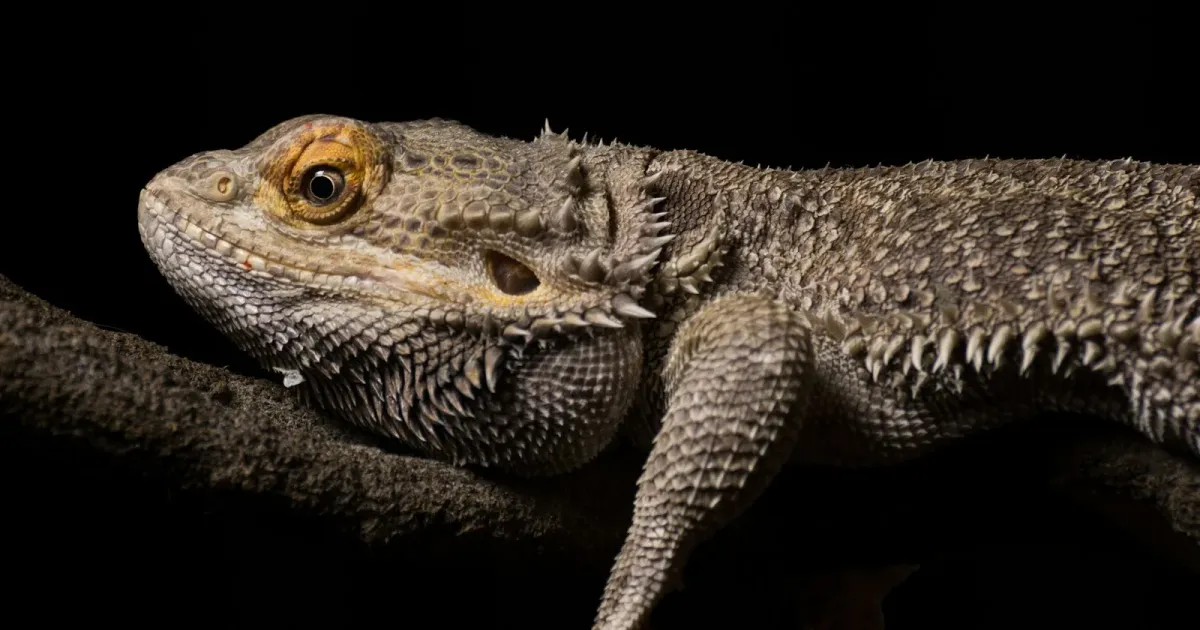
How long do bearded dragons live? Longer than many people expect when they bring home a palm-sized baby. A healthy pet dragon can stay with a family for a decade or more.
That number depends heavily on care. Most of the problems that cut a dragon's life short trace back to its lighting, food or housing. Below we explain the typical lifespan, why pets outlive wild dragons, and what you can watch for.
Quick facts
Bearded dragons live about 7 to 12 years if properly cared for (VCA Animal Hospitals).
The oldest bearded dragon on record lived to 18 years (PetMD).
Full-grown adults reach 18 to 22 inches from nose to tail tip (VCA Animal Hospitals).
The central bearded dragon, Pogona vitticeps, comes from the semi-arid interior of eastern Australia (Australian Museum).
PetMD advises replacing UV bulbs every 6 months, even if they still light up.
How long do bearded dragons live as pets?
Pet bearded dragons usually live 7 to 12 years, and about 10 years is a common average. Sources give slightly different ranges.
VCA Animal Hospitals says 7 to 12 years with proper care. PetMD's article, written by veterinarian Dr. Lauren Jones, VMD, gives a life expectancy of around 10 years in captivity and says most pet dragons live 8 to 10 years with good care. The record holder, per PetMD, reached 18.
VCA's care guide covers the inland or central bearded dragon, which comes from the dry and semi-dry southeastern parts of Australia. VCA describes it as gentle, curious and easy to tame.
How long do bearded dragons live in the wild?
Wild bearded dragons live much shorter lives than pets. PetMD says they reach only a fraction of the captive lifespan because of predators and a lack of steady food, water and medical care. Exact wild averages are hard to find, and we didn't locate a reliable field figure.
The predator list explains a lot. The Australian Museum names gull-billed terns, goannas (large monitor lizards), black-headed pythons, dingoes and birds of prey. Introduced cats and foxes hunt them too.
Wild dragons also have to find every meal. The Australian Museum says they eat leaves, fruit, ants, beetles and even small lizards. They live in dry woodland, shrubland and grassland, where food and water can be scarce. A pet gets meals, water and warmth delivered, so it skips most of those dangers.
Wild females also put a lot into breeding. The Australian Museum says a clutch holds 11 to 30 eggs, which take 78 to 85 days to hatch at about 26°C (79°F). In captivity, single females have laid up to four clutches in one season. Egg laying carries real risk for pet females too, which is why egg binding shows up later in this article.
When threatened, a wild dragon faces the intruder with its mouth open and its "beard" puffed out to make its jaw look bigger, the museum notes. That display gave the species its name.
Why do some pet bearded dragons die young?
Most early deaths come from problems with diet, lighting or housing. PetMD lists the main factors that shorten a dragon's life:
Genetics, including problems linked to inbreeding
Husbandry, meaning feeding, lighting, temperature and vet care
Metabolic bone disease from too little UVB light
Kidney disease
Retained eggs in females
Dental disease
Dehydration and trouble shedding
Obesity from overfeeding
Why UVB light matters so much
Bearded dragons need ultraviolet B (UVB) light to use calcium properly. Without enough UVB, or with a diet too low in calcium, they can develop metabolic bone disease (MBD), a condition that weakens the bones.
VCA says MBD comes from a diet high in phosphorus and low in calcium or vitamin D3, or from too little UVB light. Signs include a swollen, soft "rubber jaw," weak limbs, trembling and trouble holding a normal posture. PetMD advises changing UV bulbs every 6 months, even if they still work.
Why diet changes with age
Young bearded dragons eat mostly insects, while adults lean toward plants. VCA's feeding guide says a balanced diet overall is about half plants and half insects, with the ratio shifting as the dragon grows.
VCA recommends a light, daily dusting of phosphorus-free calcium powder on food, plus a calcium powder with vitamin D3 two to three times a week. Your reptile vet can tell you what fits your dragon. VCA also flags a few foods:
Waxworms and superworms are high in fat, so offer them sparingly and not daily.
Spinach, Swiss chard and beet greens contain oxalates, compounds that block calcium absorption, so feed them sparingly.
Fireflies are generally toxic to lizards and should never be fed.
What diseases shorten a bearded dragon's lifespan?
Besides metabolic bone disease, bearded dragons commonly get parasites, respiratory infections and a virus called atadenovirus. VCA's disease handout covers each one.
Parasites include pinworms, coccidia (single-celled gut parasites), mites and ticks. Some dragons show no signs, while others get loose stools, diarrhea and weight loss. Atadenovirus can cause fatal liver and gut infections in young dragons, which may weaken, stop eating or die suddenly.
Respiratory infections often follow stress, a poor diet or the wrong housing conditions. VCA lists sneezing, discharge from the eyes or nose, bubbles in the mouth, fast breathing and sluggishness as signs.
Female dragons can also become egg bound, a condition called dystocia. VCA warns that without treatment, dystocia is often fatal.
When to see a vet
See a reptile vet promptly if your bearded dragon's behavior or body changes. VCA's advice is simple: any change from normal deserves a vet's attention right away.
Call a vet if you notice:
A swollen or soft jaw, weak legs or trembling
Sneezing, bubbles in the mouth, discharge from the eyes or nose, or fast breathing
Diarrhea, loose stools or weight loss
Refusal to eat, weakness or unusual sluggishness
A female straining or seeming unable to pass eggs
How does a bearded dragon's lifespan compare with other pets?
A bearded dragon's 7 to 12 years is a long commitment for a small pet. Weighing pets by how long they live? Our guides on how long hamsters live, how long guinea pigs live and how long cats live give the numbers for those animals.
Lizards have some surprising habits too, and our post on why lizards do push-ups explains one of the oddest displays. For more scaly reading, see our reptiles and amphibians category.
Frequently asked questions
What is the average bearded dragon lifespan?
The average bearded dragon lifespan in captivity is around 10 years, according to PetMD. VCA Animal Hospitals gives a range of 7 to 12 years for well-cared-for pets.
How long do bearded dragons live in captivity?
Bearded dragons in captivity usually live 8 to 12 years with good care. PetMD says most pet dragons live 8 to 10 years, and VCA gives up to 12.
What is the oldest bearded dragon ever?
The oldest bearded dragon on record lived to 18 years, according to PetMD. Most pet bearded dragons don't come close to that age.
Do bearded dragons live longer in captivity or in the wild?
Bearded dragons live longer in captivity. PetMD says wild bearded dragons live only a fraction of the captive lifespan because of predators and unreliable food, water and care.
What is the most common cause of early death in bearded dragons?
Poor husbandry is behind many early bearded dragon deaths. PetMD lists metabolic bone disease from too little UVB light, kidney disease, obesity, dehydration and retained eggs among the main factors.
How can I help my bearded dragon live longer?
A bearded dragon lives longer with the right UVB lighting, warm basking temperatures, a balanced diet with calcium, and regular care from a reptile vet. PetMD recommends replacing UV bulbs every 6 months.
Sources
Bearded dragons: owning, VCA Animal Hospitals
Bearded dragons: feeding, VCA Animal Hospitals
Bearded dragons: diseases, VCA Animal Hospitals
Bearded dragons: problems, VCA Animal Hospitals
How long do bearded dragons live?, PetMD, by Lauren Jones, VMD
Central bearded dragon, Australian Museum

Comments