
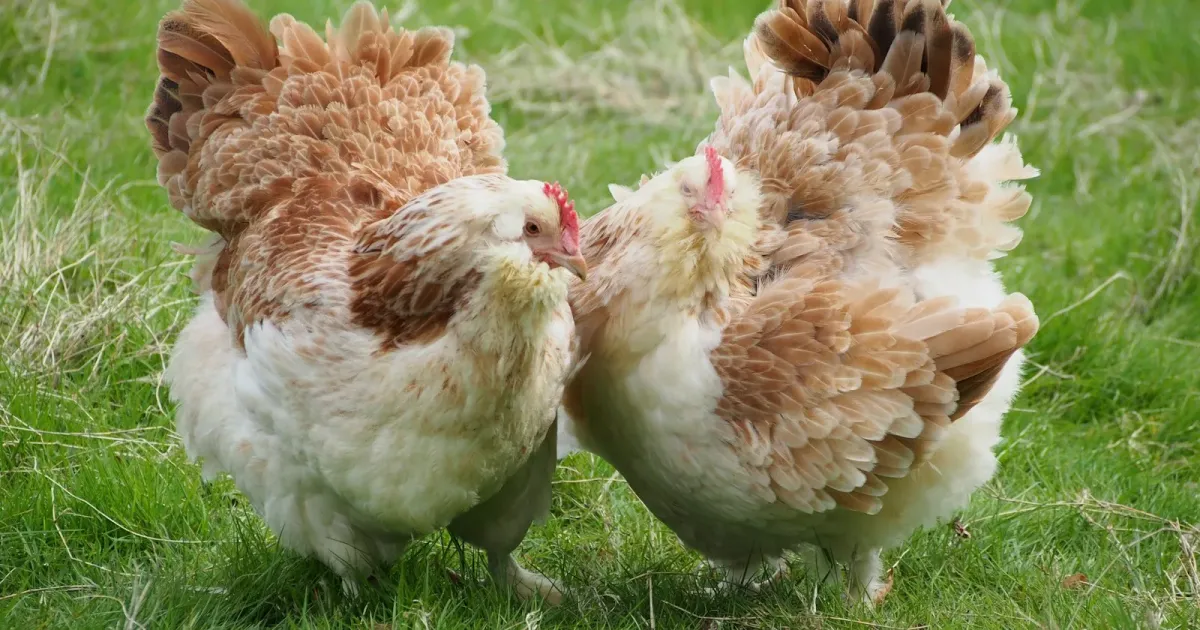
If you're thinking of keeping hens, or you already have a few pecking around the yard, you'll want to know how long do chickens live. The honest answer depends on what kind of chicken you mean. A pet hen in a safe coop can live many years. A chicken raised on a commercial farm usually doesn't get the chance.
Here's what's known about chicken lifespan, why it varies so much, and how egg laying changes as a hen gets older.
Quick facts
A chicken may live 5 to 10 years, depending on the breed, according to the summary on Wikipedia.
The oldest known chicken, a hen named Matilda from Bessemer, Alabama, lived to 16 and died in 2006 (Wikipedia)).
Commercial laying hens are about 17 months old when the British Hen Welfare Trust collects them from farms for rehoming.
Many home flocks lay eggs on and off for three to four years, says University of Kentucky poultry scientist Jacquie Jacob on Poultry Extension.
Chickens descend mainly from the red junglefowl of southern Asia, with a domestication history of about 7,400 years (Britannica).
How long do chickens live?
Chickens commonly live 5 to 10 years, but the real range depends on breed, care and what the bird is raised for. That 5 to 10 year figure is widely repeated, though we couldn't find a large study that measured backyard chicken lifespans directly. Treat it as a rough guide.
The record shows what's possible. Matilda, a small hen of the Old English Game type, belonged to Keith and Donna Barton of Bessemer, Alabama. She performed in their magic act and appeared on The Tonight Show in 2004. Guinness World Records recognized her as the world's oldest living chicken that same year. She died in February 2006 at age 16.
Matilda was exceptional. Most backyard hens won't reach anything like that age, but a well-protected bird can still live for many years.
Why do farm chickens live such short lives?
Farm chickens live short lives because they're kept only as long as they're productive, which is far shorter than their natural lifespan. The two main kinds of farm chicken have very different timelines.
Laying hens
Commercial laying hens are kept until their egg production drops. The British Hen Welfare Trust says hens are about 17 months old when it collects them from farms. By then they've worked for almost 18 months and are no longer commercially viable, since they may be laying fewer eggs. The trust's hen health FAQs put "end of lay" for commercial hens at 78 weeks of age.
Many of those rehomed hens go on to live as backyard pets. The trust notes that most keep laying for a while, though often fewer eggs than before.
Meat chickens
Meat chickens, called broilers, have the shortest lives of all. Broiler breeds typically reach slaughter size in less than six weeks. That means a meat chicken lives only a few weeks.
How long do backyard chickens live?
Backyard chickens can live for years past their laying prime if they're kept safe and healthy. Unlike commercial birds, a pet hen often stays with the flock after she stops laying.
Several things affect how long a backyard chicken lives:
Predators. The Poultry Extension guide to predators lists coyotes, raccoons, weasels, foxes, bobcats, hawks, owls and snakes among the threats to backyard flocks.
Housing. Closing the coop securely at night is one of the main defenses. The guide also suggests burying hardware cloth at least 12 inches into the ground to stop digging predators.
Disease. Poultry Extension groups common chicken diseases by body system, from respiratory and digestive problems to skin and reproductive conditions.
Breed. Different breeds have different typical lifespans, and the commonly cited range runs from 5 to 10 years.
Do roosters live as long as hens?
We didn't find a reliable source comparing rooster and hen lifespans directly. The commonly cited 5 to 10 year range covers chickens in general, and in a backyard setting the same risks apply to both: predators, disease and breed.
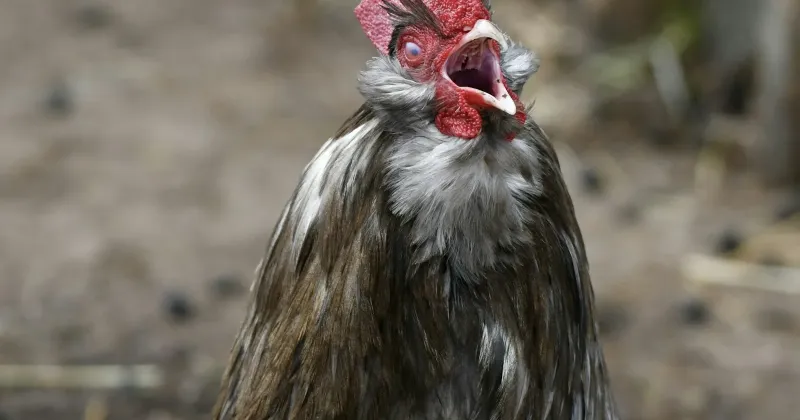
Roosters do have their own quirks, starting with the crowing. Our post on why roosters crow explains what's behind it. Roosters also grow spurs on their legs, and Poultry Extension even has a guide to trimming them.
How long do chickens lay eggs?
Hens typically lay well for two to three years, then produce fewer eggs each year after that. Jacquie Jacob of the University of Kentucky writes that many home flocks produce eggs on and off for three to four years. Each year, production is lower than the year before.
In a separate Poultry Extension article, Jacob and Penn State's Gregory Martin say a hen that lays for two to three years can be considered a successful layer. So a hen may live several years after her laying slows down.
Egg quality changes with age too. Jacob notes that egg size goes up each year while shell quality goes down. The British Hen Welfare Trust says the same: older hens lay bigger eggs, which can lead to weaker, wrinkled or soft shells.
Why do hens stop laying in winter?
Hens slow down or stop laying when days get short, because light drives egg production. Jacob says a flock needs at least 14 hours of light a day to keep laying year-round.
Hens also go through a molt. During a molt a hen stops laying, loses and replaces her feathers, takes a break, and then starts laying again.
Where do chickens come from?
Chickens descend mainly from the red junglefowl, a wild bird of southern and southeastern Asia. Britannica says chickens are primarily descended from the red junglefowl of India and cites a 7,400-year history of domestication.
The red junglefowl's native range stretches from Pakistan and India east through southern China and into Southeast Asia, including Thailand, Vietnam, Malaysia and the Philippines. Genetic studies summarized on Wikipedia suggest domestication happened roughly 8,000 years ago, so estimates differ a little. Other junglefowl species added smaller amounts of DNA.
Today the domestic chicken is everywhere. Wikipedia's summary says the global chicken population passed 26.5 billion as of 2023.
If you're comparing pets before you commit, lifespan is worth checking for each one. Our guides to how long rabbits live and how long cats live cover two common choices.
Chickens also share yards with other birds. If you keep ducks too, our post on what ducks eat covers how their needs differ. Find more barnyard questions in our farm animals section.
Frequently asked questions
How long do chickens live?
Chickens commonly live 5 to 10 years, depending on breed and care. The oldest known chicken, a hen named Matilda, lived to 16.
How long do backyard chickens live?
Backyard chickens can live 5 to 10 years if they're protected from predators and disease. Coyotes, raccoons, foxes, hawks and owls are among the predators that threaten backyard flocks, so a secure coop matters.
How long do chickens lay eggs?
Chickens in home flocks often lay eggs on and off for three to four years, with fewer eggs each year. A hen that lays well for two to three years is considered a successful layer.
How long do chickens live on a farm?
Chickens on commercial farms live much shorter lives than pets. Laying hens are usually removed at around 17 to 18 months old, and meat chickens reach slaughter size in under six weeks.
What is the oldest chicken ever recorded?
The oldest known chicken was Matilda, a hen from Bessemer, Alabama, who lived to 16 and died in 2006. Guinness World Records named Matilda the world's oldest living chicken in 2004.
Do chickens stop laying eggs when they get old?
Chickens lay fewer eggs each year as they age, and many hens eventually stop. Older hens also tend to lay bigger eggs with weaker shells.
Sources
Raising chickens for egg production, Poultry Extension (Jacquie Jacob, University of Kentucky)
Poultry end-of-life situations in small and backyard flocks, Poultry Extension (Jacquie Jacob and Gregory Martin)
Predator management for small and backyard poultry flocks, Poultry Extension
Hen adoption FAQs, British Hen Welfare Trust
Hen health FAQs, British Hen Welfare Trust
Chicken, Encyclopaedia Britannica
Chicken, Wikipedia
Matilda (chicken)), Wikipedia
Red junglefowl, Wikipedia


Comments