
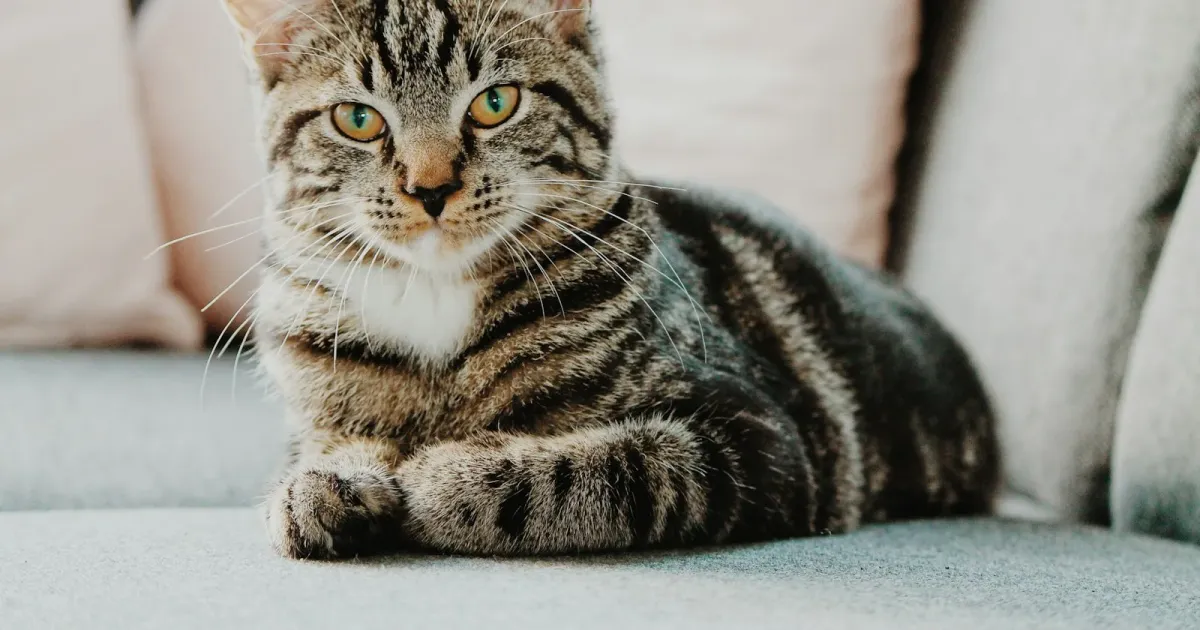
How long do cats live? The usual answer is "about 15 years," but real numbers vary a lot between studies, breeds and households. Some cats die young from accidents. Others pass 20.
The best data comes from large studies of veterinary records, which track thousands of cats from birth to death. Below we walk through what those studies found, why some cats outlive others, and what you can do to give your cat a long life.
Quick facts
A 2024 study of 7,936 cats that died in the UK found an average life expectancy of 11.74 years (Phys.org, reporting on the Royal Veterinary College study).
In that study, female cats averaged 12.51 years and male cats 11.18 years (Companion Animal Psychology).
A 2015 study of 4,009 cat deaths in England found a median lifespan of 14 years for crossbred cats and 12.5 years for purebreds (EveryCat Health Foundation).
In the 2024 study, Burmese (14.42 years) and Birman (14.39 years) cats lived longest, while the Sphynx averaged 6.68 years (Companion Animal Psychology).
The oldest cat on record, Creme Puff of Austin, Texas, lived 38 years and 3 days (Guinness World Records).
How long do cats live on average?
The average pet cat lives somewhere between 12 and 15 years, depending on which study you read. Two large studies from the UK's VetCompass program, run by the Royal Veterinary College (RVC), give the clearest picture.
The newer one, led by Kendy Tzu-yun Teng, appeared in the Journal of Feline Medicine and Surgery in 2024. It built life tables from cats that died between 2019 and early 2021. A life table estimates how many more years an animal can expect to live at each age. The average life expectancy at birth was 11.74 years.
An earlier RVC study, led by Dan O'Neill and published in 2015, looked at 4,009 cat deaths across 90 veterinary practices in England. It found a median longevity of 14 years. The median is the middle value, so half the cats lived longer and half lived shorter. The two studies measured slightly different things, which helps explain the gap.
PetMD, in an article reviewed by veterinarian Barri J. Morrison, gives a typical range of 13 to 17 years.
How long will an older cat keep going?
An older cat's remaining life is longer than you might expect. The 2024 life tables, as summarized by Companion Animal Psychology, estimate the extra years a cat is likely to have:
A cat aged 9 to 10 can expect about 6.08 more years.
A cat aged 12 to 13 can expect about 4.24 more years.
A cat aged 15 to 16 can expect about 2.72 more years.
A cat aged 19 to 20 can expect about 1.40 more years.
Why do some cats live longer than others?
Sex, breed, body weight, neutering and lifestyle all shape how long a cat lives. Some of these you can change, and some you can't.
Female cats outlive males
In the 2024 study, females lived more than a year longer than males on average, at 12.51 versus 11.18 years. Phys.org put the gap at about 16 months.
Crossbred cats tend to beat purebreds
Crossbred cats, often called moggies or domestic shorthairs, generally live longer. The 2015 study found a median of 14 years for crossbreds and 12.5 years for purebreds. That's according to the EveryCat Health Foundation, which summarized the study. It also noted that individual breeds varied a lot.
The researchers behind the 2024 study linked some breeds' short lives to selective breeding. Phys.org reports they named the Sphynx as an example of breeding that produced a popular but unhealthy pet.
Weight and neutering matter
In the 2015 study, heavier body weight was linked to a shorter life, and neutering showed a cautious link to a longer one. PetMD says spayed and neutered cats can live longer, partly through lower cancer risk. It also says obesity can lead to arthritis and diabetes that shorten a cat's life.
The 2024 study added a twist. The average cat in it weighed 5.5 kg, and cats far from that weight in either direction had shorter lives. Companion Animal Psychology notes the authors raised the possibility that being slightly overweight might protect older cats.
Which cat breeds live the longest?
Burmese and Birman cats live the longest in the UK data. The two studies ranked breeds a little differently:
2024 study: Burmese 14.42 years, Birman 14.39 years, crossbreds 11.89 years, Bengal 8.51 years, Sphynx 6.68 years.
2015 study: Birman 16.1 years, Burmese 14.3 years, Abyssinian 10.0 years, Bengal 7.3 years.
Breed averages describe groups, so any single cat can land well above or below its breed's number.
Do indoor cats live longer than outdoor cats?
Indoor cats usually live longer, though sources disagree on how big the gap is. PetMD says indoor cats often live 15 to 20 years or more, and estimates that outdoor cats live about half as long. We couldn't find a large study confirming that exact figure, so treat it as a rough guide.
The risks behind it are well documented. International Cat Care lists traffic, infectious diseases from other cats, fights, dog attacks and poisons such as antifreeze. It notes that cats in rural areas and near long, straight roads face a higher risk of being hit by cars. In the 2015 English study, trauma was the single most common cause of death, at 12.2% of cases, and it led the causes in cats under 5.
Indoor life has its own costs. International Cat Care says indoor-only cats are more prone to obesity, boredom and stress-related problems. It recommends climbing spaces, enrichment and a variety of toys. Our posts on why cats sleep so much and why cats like boxes look at two everyday indoor-cat habits.
How old is a cat in human years?
A common rule says a 1-year-old cat is like a 15-year-old person, a 2-year-old cat is like a 24-year-old, and each year after adds about four human years. Purina uses this rule and says plainly that there's no reliable scientific way to convert cat years. On that scale:
5 cat years is about 36 human years.
10 cat years is about 56 human years.
15 cat years is about 76 human years.
Vets often think in life stages instead. In 2021, the American Animal Hospital Association and the American Association of Feline Practitioners updated their feline life stage guidelines. As the AVMA reported, kittens run from birth to 1 year and young adults from 1 to 6. Mature adults are 7 to 10, and seniors are 10 and up.
How can you help your cat live longer?
Regular vet care, a healthy weight and a safe, interesting home give a cat the best odds. These steps come from the sources above:
Keep your cat at a healthy weight. Both the 2015 study and PetMD tie excess weight to shorter lives.
Spay or neuter. PetMD links it to a lower cancer risk.
Look after teeth. PetMD recommends brushing and professional cleanings.
Microchip and vaccinate, and treat for parasites, as International Cat Care advises for all cats.
Book checkups. VCA Animal Hospitals recommends vet exams at least twice a year for senior cats.
Knowing your cat's normal habits also helps you spot changes early. Our guides explain why cats purr and why cats knead. For more on cat behavior and health, visit our cats category.
When to see a vet
See a vet whenever an older cat's habits change, because cats hide illness well. International Cat Care considers cats senior at 11 to 14 years and super senior from 15. It and VCA list these warning signs:
Losing weight or muscle
Changes in appetite
Drinking or peeing more than usual
Stiffness, limping or trouble jumping
Accidents outside the litter box, or straining to pee or poop
Vomiting, or diarrhea that lasts more than three days
Bad breath or drooling
New lumps or bumps
Seeming disoriented or distressed
Common diseases in older cats include chronic kidney disease, hyperthyroidism, arthritis, dental disease and diabetes, per International Cat Care and VCA.
Frequently asked questions
How long do indoor cats live?
Indoor cats often live 15 to 20 years or more, according to PetMD. Indoor cats avoid traffic, fights and many infections, though International Cat Care notes they face a higher risk of obesity and boredom.
How long do outdoor cats live?
Outdoor cats tend to have shorter lives than indoor cats, and PetMD estimates about half as long. In a 2015 study of cats in England, trauma such as road accidents was the most common cause of death.
Is 15 old for a cat?
Yes, 15 is old for a cat. International Cat Care calls cats aged 15 and up super senior, and VCA classes cats over 15 as geriatric.
Do male or female cats live longer?
Female cats live longer on average. A 2024 Royal Veterinary College study found an average life expectancy of 12.51 years for females and 11.18 years for males.
What is the longest a cat has lived?
The oldest cat on record is Creme Puff, who lived in Austin, Texas, from August 3, 1967, to August 6, 2005. Guinness World Records lists Creme Puff's age as 38 years and 3 days.
What cat breed lives the longest?
Burmese and Birman cats had the longest life expectancies in a 2024 UK study, at about 14.4 years each. An earlier 2015 study put the Birman on top at a median of 16.1 years.
Sources
Life tables of annual life expectancy and risk factors for mortality in cats in the UK, Teng et al., Journal of Feline Medicine and Surgery (2024)
Life expectancy study reveals longest and shortest-lived cats, Phys.org
The average cat lives 11.74 years, according to new research, Companion Animal Psychology
Longevity and mortality of cats attending primary care veterinary practices in England, O'Neill et al., Journal of Feline Medicine and Surgery (2015)
Demographics: life and death of cats in England, EveryCat Health Foundation
How Long Do Cats Live?, PetMD
Should I keep my cat indoors or allow outdoor access?, International Cat Care
Special considerations for senior cats, International Cat Care
Senior Cat Care: Special Considerations, VCA Animal Hospitals
Cat Years to Human Years, Purina
Oldest cat ever, Guinness World Records



Comments