
How do eels reproduce? People have puzzled over that since ancient Greece. Eels seemed to have no sex organs, so Aristotle decided they came from "the entrails of the earth," according to the Smithsonian's Ocean Portal.
The real answer is stranger. American and European eels spend years in fresh water, then swim out to a patch of the Atlantic called the Sargasso Sea to breed. Even today, scientists have never watched them spawn there. Below is what researchers do know, and why the question took so long to crack.
Quick facts about eel reproduction
American eels spawn in the Sargasso Sea in winter to early spring, then die (Virginia Institute of Marine Science).
A female American eel can carry from about 0.6 million to nearly 30 million eggs, depending on her size (USFWS).
In 2022, researchers reported that 5 of 26 satellite-tagged European eels reached the Sargasso Sea (Scientific Reports).
Japanese scientists collected 31 wild Japanese eel eggs near the West Mariana Ridge in the Pacific in 2009 (Nature Communications).
The IUCN lists the European eel as critically endangered (Britannica).
How do eels reproduce in the ocean?
Freshwater eels reproduce by spawning in the open ocean, far from the rivers where they live. Biologists call this pattern catadromous: the fish lives in fresh or brackish water but travels to the ocean to breed.
The Atlantic States Marine Fisheries Commission describes the American eel as panmictic. That means eels from the species' entire range come together to reproduce as one big population.
A 2015 US Fish and Wildlife Service (USFWS) species report places spawning in the southwestern Sargasso Sea. The water there is warmer than 18°C (64°F) and very salty. The report notes that spawning itself has never been directly observed. Scientists piece together the location from where they catch the smallest larvae.
Eels spawn once in their lives. The Virginia Institute of Marine Science (VIMS) describes American eels as semelparous, meaning they spawn and die.
What are the stages of the eel life cycle?
An eel goes through five named stages, from larva to breeding adult. VIMS lists them for the American eel:
Leptocephalus (plural leptocephali): a flat, see-through, leaf-shaped larva that drifts on currents
Glass eel: a small, transparent eel shaped like an adult
Elver: a young eel that has darkened in color and moved into rivers or estuaries
Yellow eel: the long-lived growing stage, spent in fresh or brackish water
Silver eel: the mature adult that heads back to sea to spawn
The larval trip is long. VIMS says American eel larvae ride ocean currents northwest for 9 to 12 months and can reach about 85 millimeters long. Young eels then enter East Coast estuaries between February and June.
The yellow eel stage takes up most of an eel's life. In Chesapeake Bay, VIMS reports that eels mature at 2 to 18 years old, with most between 2 and 6. European eels take longer: Britannica says they live 10 to 15 years as yellow eels before turning silver.
If you like animals that completely remake their bodies between stages, compare this with the caterpillar-to-adult change in our moth vs butterfly guide.
What happens to an eel's body before it spawns?
An eel's body rebuilds itself for a one-way ocean trip. This change is called silvering, and the USFWS report describes it in detail:
The body turns silvery.
The eyes get bigger and gain more rod cells (the light-sensing cells used in dim light).
The nostrils widen and the lateral line, a row of pressure-sensing pores, becomes easier to see.
The digestive tract shrinks.
Fat stores rise sharply to fuel the migration.
The pectoral fins become more prominent and red muscle increases.
That fat has to carry the eel a long way. The Smithsonian Ocean Portal puts the European eel's migration at 3,000 to 6,200 miles.
How do eels decide to be male or female?
Eel sex is set by the environment, not by genes alone. The USFWS report explains that when eels live crowded together, more become males. In less crowded water, more become females.
The two sexes also live in different places. Females tend to move far upstream and grow large, sometimes over 1 meter long in northern areas. Males mostly stay downstream in estuaries and mature at about 35 to 40 centimeters. Bigger females carry more eggs. The USFWS report gives the example of a 73 centimeter female with about 2.7 million eggs and an 87 centimeter female with about 5.2 million.
Why was eel reproduction such a mystery?
Eel reproduction stayed hidden because it happens far out at sea, and the eels people caught in rivers didn't seem to have sex organs.
Ancient writers guessed wildly. The Smithsonian Ocean Portal notes that Pliny the Elder thought baby eels grew from bits of skin adults rubbed off on rocks. Centuries later, a young Sigmund Freud dissected 400 eels at a marine research station in Trieste, looking for their reproductive organs, according to the Freud Museum London.
The breakthrough came from biologist Johannes Schmidt. From 1904 to 1921, with a break during World War I, he towed nets across the Atlantic. The Smithsonian explains that the eel larvae he caught got smaller the farther west he went. The smallest ones pointed him to the Sargasso Sea.
That was indirect evidence. In September 2022, Hakai Magazine (republished by Smithsonian) quoted biologist Estibaliz Díaz saying no one has found a European eel egg or seen the eels spawning.
Have scientists tracked eels to the Sargasso Sea?
Yes, in 2022 scientists followed adult European eels into the Sargasso Sea for the first time. Wright and colleagues published the results in Scientific Reports.
The researchers fitted satellite tags to 26 female silver eels from rivers in the Azores. Five of them reached the Sargasso Sea, and one got into the presumed breeding area. Their trips took 40 to 366 days, averaging 187 days, at a slow average of about 6.8 kilometers a day.
The authors think eels take a long, slow route at depth to save energy and lower their risk of dying on the way. That timing lets them finish maturing in time for peak spawning in February and March.
Scientists have had better luck with eels in the Pacific. In 2011, Katsumi Tsukamoto and colleagues reported in Nature Communications that they had collected 31 naturally spawned Japanese eel eggs near the West Mariana Ridge. The eggs were found at depths of 150 to 200 meters, around the new moon.
Can eels be bred in captivity?
Breeding eels in captivity is possible but extremely hard. A 2013 Yale Environment 360 report says Japan's Fisheries Research Agency first raised two generations of eels in captivity in 2010.
The process needs hormone treatments because eels won't mature on their own in tanks. Feeding the larvae is the hardest part. According to the same report, larvae in the lab take 250 to 300 days to develop, compared with 110 to 160 days in the wild, and fewer than 10% survive. Researchers fed them a paste made largely of shark eggs and soy protein.
The World Wildlife Fund says freshwater eels still can't be bred sustainably in captivity. So eel farms, mostly in Asia, rely on young eels caught in the wild. Meanwhile, the IUCN lists the European eel as critically endangered.
For another ocean animal with a strange life story, read why whales explode. You'll find more sea creatures in our ocean life category.
Do all eels reproduce the same way?
No. The long ocean migration above belongs to freshwater eels such as the American, European and Japanese eels. Other eels and eel-like fish breed differently.
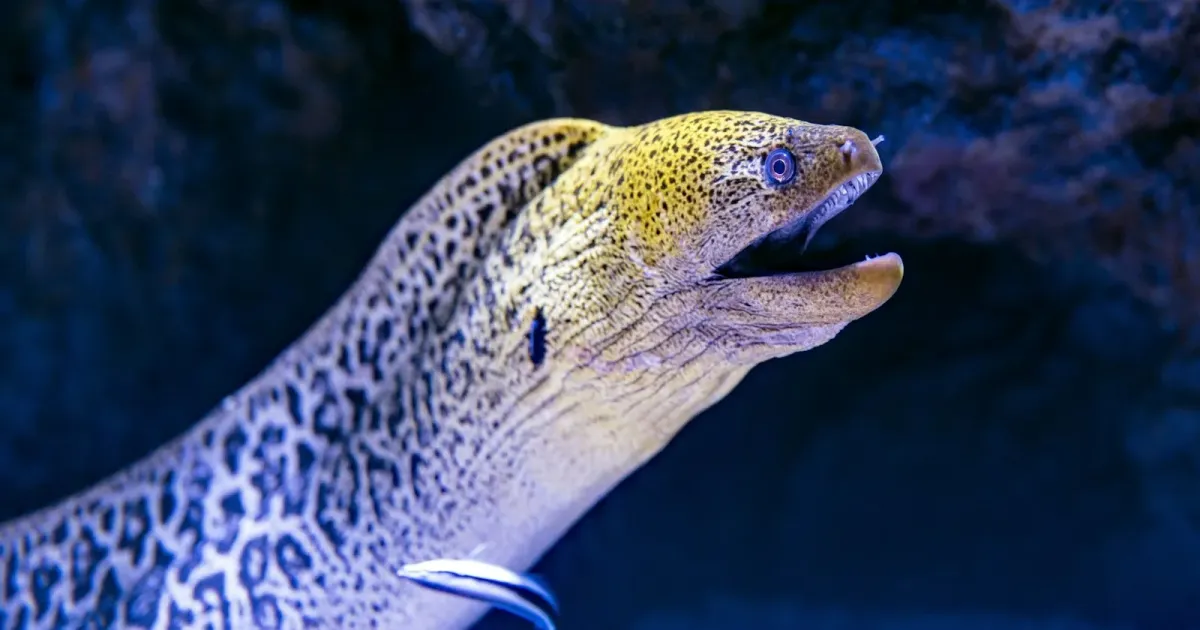
Moray eels lay eggs, and their young also go through a leaf-shaped leptocephalus stage, according to Georgia Aquarium. Electric eels aren't true eels at all. The Smithsonian's National Zoo says they're more closely related to catfish and carp. Male electric eels build nests out of saliva, and females lay 1,200 to 1,700 eggs during the dry season. The males then guard the larvae until the rains come.
For a very different take on animal parenting, see why hamsters eat their babies.
Frequently asked questions
Do eels die after they reproduce?
Yes, freshwater eels such as American and European eels die after spawning. The Virginia Institute of Marine Science describes American eels as semelparous, meaning they breed once and then die. Before the trip, their digestive tract shrinks and their bodies build up fat to fuel the migration.
Where do eels lay their eggs?
American and European eels lay their eggs in the Sargasso Sea, a region of the North Atlantic east of the Bahamas and south of Bermuda. Japanese eels spawn in the Pacific, near the West Mariana Ridge. Nobody has yet found a European eel egg in the wild.
How many eggs does an eel lay?
A female American eel can carry from about 0.6 million to nearly 30 million eggs, according to the US Fish and Wildlife Service. Larger females carry more. One 87 centimeter female held about 5.2 million eggs.
Are eels born in the ocean?
Yes, freshwater eels hatch in the ocean as see-through larvae called leptocephali. The larvae drift on currents for months before reaching the coast. They then swim into rivers and lakes as glass eels and elvers.
How do electric eels reproduce?
Electric eels reproduce in freshwater nests that males build from saliva. The Smithsonian's National Zoo says females lay 1,200 to 1,700 eggs during the dry season. Males guard the larvae until the rainy season.
How long do eels live before they spawn?
Freshwater eels usually live for years before spawning. American eels in Chesapeake Bay mature at 2 to 18 years old, according to the Virginia Institute of Marine Science. Britannica says European eels spend 10 to 15 years as yellow eels before migrating.
Sources
American Eel Life History, Virginia Institute of Marine Science
American Eel Biological Species Report (2015), US Fish and Wildlife Service
American Eel, Atlantic States Marine Fisheries Commission
The Origin of Eels, Smithsonian Ocean Portal
The Utterly Engrossing Search for the Origin of Eels, Smithsonian Magazine
First direct evidence of adult European eels migrating to their breeding place in the Sargasso Sea, Scientific Reports (2022)
Oceanic spawning ecology of freshwater eels in the western North Pacific, Nature Communications (2011)
European eel, Britannica
The Young Anatomist, Freud Museum London
In Japan, Captive Breeding May Help Save the Wild Eel, Yale Environment 360
Nature's most mysterious fish, World Wildlife Fund
Green Moray Eel, Georgia Aquarium
Electric eel, Smithsonian's National Zoo



Comments