
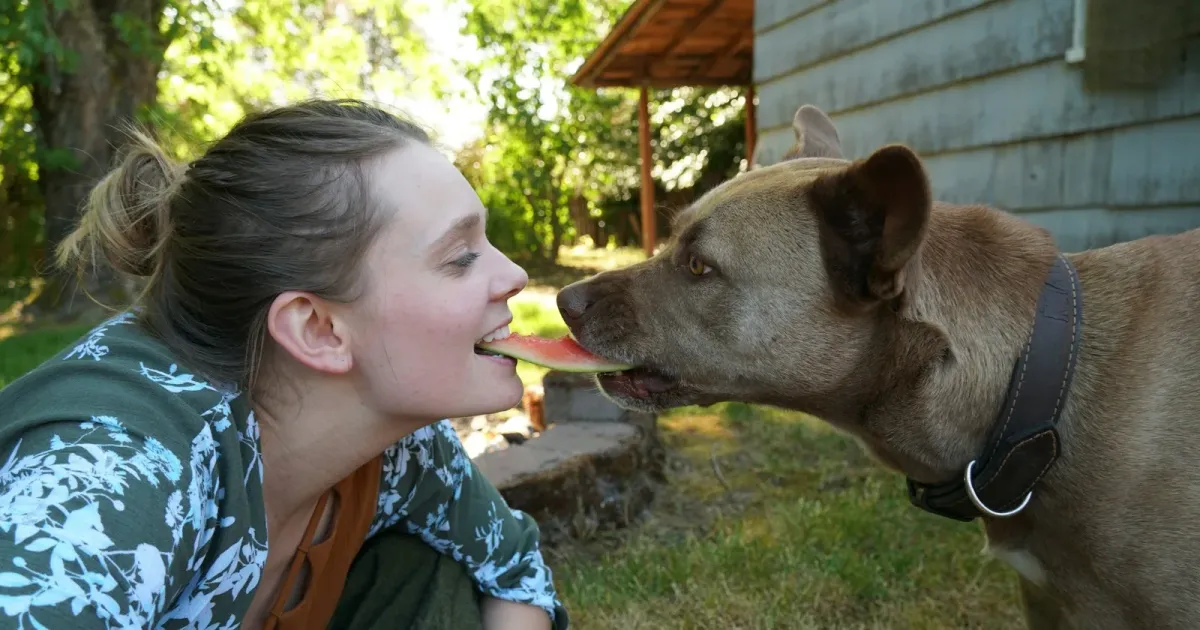
Why do dogs lick you? There's no single answer, because one lick can mean several things. A slobbery welcome at the front door is different from a nervous lick by a dog being hugged too tightly.
Most licking is normal and friendly. Below are the main reasons, according to behaviorists, vets and a 2017 study. We also cover face, feet, lip and paw licking, and when licking has gone too far.
Quick facts
Puppies lick their mother's face and muzzle to get her to bring up food (American Kennel Club).
A 2017 study of 116 dogs found lip licking was a common part of how dogs greeted unfamiliar people (Journal of Veterinary Behavior).
In a 2012 study, 14 of 17 dogs that licked floors and other surfaces excessively had gastrointestinal disease (Clinician's Brief).
Dog mouths carry Capnocytophaga bacteria, though most people in contact with dogs never get sick (CDC).
Allergies to food, pollen, grass or fleas are among the most common reasons dogs lick their paws (PetMD).
Why do dogs lick? 7 common reasons
Dogs lick to communicate, to bond and to explore, and the reason usually shows in the rest of the body. Here are the seven explanations that come up most.
1. It started as a puppy instinct
Licking starts in the litter. Dr. Alexandra Horowitz of the Dog Cognition Lab told the American Kennel Club that puppies lick their mother's face when she returns from a hunt, prompting her to regurgitate food.
Behaviorist Patricia McConnell cites research by Erik Zimen showing the same face licking in wolf pups. Adult dogs rarely regurgitate in response, but the licking sticks around. Cats keep a nursing habit of their own, which we cover in why cats make biscuits.
2. It's a greeting
Horowitz says licking has become a ritual greeting for many dogs. In 2017, Angelika Firnkes and colleagues published a study in the Journal of Veterinary Behavior. They watched 116 dogs meet strangers who acted neutral, friendly or threatening.
Lip licking turned up again and again when the dogs greeted people. The researchers think it helps signal peaceful intentions when a dog comes close.
3. It's a sign of affection
Certified applied animal behaviorist Dr. Mary Burch told the AKC that licking can show affection. She suggests it may give the dog the same comfort it felt when its mother licked it.
In a relaxed, wiggly dog, reading a lick as a "dog kiss" is fair enough.
4. Your dog wants attention
Dogs repeat whatever pays off. Trainer Erika Lessa, writing for PetMD, lists attention seeking among the main reasons for face licking. If a lick earns petting, talk or play, your dog learns to lick more, and she advises not rewarding it with attention.
5. You taste interesting
Human skin is slightly salty. Both Horowitz and Burch told the AKC this makes licking appealing, especially after you've exercised. Dogs also tend to lick people who have just eaten, Horowitz says.
6. It helps calm a tense moment
Licking can be an appeasement signal, a way of showing "I mean no harm." In the 2017 study, dogs used lip licking and looking away as appeasement signals, especially when a stranger acted threatening.
Lessa says licking releases endorphins (the body's feel-good chemicals), which may help anxious dogs calm themselves. A dog licking you during a vet visit or a loud party may be coping, not celebrating.
7. Your dog is asking for space
McConnell writes about an idea from dog behavior consultant Jennifer Shryock called "kiss to dismiss," where intense licking is meant to make someone back off.
Lessa says to watch for dilated pupils, a tucked tail, leaning forward or a head that keeps turning away. Paired with licking, these mean the dog wants room. This matters most with children, who tend to hug dogs closely.
Why do dogs lick your face?
Dogs lick your face because the habit traces back to puppies licking their mother's muzzle, and because your face is full of interesting smells and tastes. Lessa says dogs are drawn to tears, sweat, food residue and skin oils around the eyes and mouth.
She also notes that tears hold hormones and proteins as well as salt, and dogs may pick up on them. That may be part of why some dogs lick people who are crying, though no study has pinned down what the dog is feeling.
Why do dogs lick your feet?
Dogs lick your feet mostly because feet are sweaty and smell strongly of you. The AKC says sweat contains salt, which many dogs like, and that feet carry pheromones (chemical scent signals). Dogs read these with the Jacobson's organ, a sensory organ in the nose and mouth that lets them taste and smell at the same time.
The AKC adds that foot licking quickly becomes an attention habit if your dog treats your reaction as a game. Redirecting with rewards works better than scolding.
Why does my dog keep licking his lips?
A dog that keeps licking its lips may be nauseous, stressed or reacting to food. PetMD lists nausea, dental disease, something stuck in the mouth, stress or appeasement, thirst, and the sight or smell of food.
Occasional lip licking on a car ride is usually normal. PetMD advises a vet visit if your dog suddenly starts licking its lips a lot, especially with lethargy, poor appetite, drooling, vomiting, pawing at the mouth or trouble swallowing. Nausea also sends some dogs to the lawn, as our article on why dogs eat grass explains.
Why do dogs lick their paws?
Frequent paw licking usually means a dog's paws itch or hurt. According to PetMD, allergies are among the most common causes. Triggers include food proteins such as chicken, seasonal pollen and grass, household products, and flea bites.
The AKC adds cuts, torn nails, objects stuck between the pads, mange, arthritis pain, boredom and anxiety. AKC chief veterinarian Dr. Jerry Klein says frequent, intense paw licking means you can assume something is wrong. The constant moisture can also lead to secondary infections.
Take your dog to the vet for paw licking if you notice:
Red, swollen or bleeding paws
Limping, or discharge that suggests infection
Whimpering or wincing when the paw is touched
Licking that is frequent and intense, or that won't stop
When is dog licking excessive?
Dog licking becomes a concern when it's frequent, intense, hard to interrupt or disrupts daily life. VCA Animal Hospitals defines a compulsive disorder as a behavior repeated often enough to disrupt a dog's routine. Excessive licking of the legs is one example, along with tail chasing and pacing.
VCA lists pain, skin problems, chronic stress, too little exercise or mental stimulation, and genetics as possible drivers. Licking can point to a gut problem, too. In the 2012 study by Bécuwe-Bonnet and colleagues, 14 of 17 dogs that licked surfaces excessively had gastrointestinal disease. After treatment, the licking stopped completely in 9 of the 17. Vets rule out medical causes first for this reason.
For everyday licking that's more than you'd like, these steps follow the AKC and PetMD advice:
Stay calm and stop giving attention when your dog licks.
Ask for a sit or a toy fetch instead, and reward that.
Offer a lick mat or puzzle toy as an outlet.
Make sure your dog gets enough exercise, play and time with you.
Is it safe to let your dog lick you?
For most healthy people, an occasional lick is low risk. The CDC says Capnocytophaga bacteria live in the mouths of dogs and cats and can spread through bites, scratches or close contact. Most people never get sick. People with weakened immune systems, such as those with cancer or taking steroids, face a higher risk.
The AKC compares the odds of catching it from a pet to being struck by lightning: extremely rare, but possibly deadly. A few habits keep the risk down:
Wash your hands with soap and running water after contact with dog saliva, as the CDC recommends.
Don't let your dog lick cuts, wounds or broken skin.
Take more care if anyone at home has a weakened immune system, and ask a doctor for advice.
Supervise young children around dogs, and supervise hand washing for kids under 5.
When to see a vet about licking
Talk to your vet or a qualified behaviorist if you notice:
Licking that's constant or hard to interrupt, even with distractions
A sudden change in how much your dog licks
Licking floors, walls or other surfaces
Licking along with vomiting, diarrhea, weight loss or appetite changes
Red, raw, hairless or sore patches from self-licking
Pacing, trembling or hiding
Frequently asked questions
Why do dogs lick you to show affection?
Dogs often lick people as a sign of affection, and behaviorist Dr. Mary Burch says licking may comfort a dog the way its mother's licking did. A relaxed body and soft eyes suggest a happy lick.
Why do dogs lick your face so much?
Dogs lick your face because puppies lick their mother's muzzle, and the habit carries into adulthood as a greeting. Your face also holds tears, sweat, skin oils and food traces that dogs find interesting. Face licking with a tucked tail or turned head can mean stress instead.
Why do dogs lick your feet?
Dogs lick your feet because sweaty feet taste salty and carry strong scent signals called pheromones. The AKC notes that foot licking can also become an attention habit if you react every time. Redirecting your dog to a toy or a sit works better than scolding.
Why does my dog keep licking his lips?
A dog that keeps licking his lips may feel nauseous, stressed or thirsty, or may have a dental problem or something stuck in the mouth. PetMD advises a vet visit if lip licking starts suddenly or comes with vomiting, drooling, lethargy or trouble swallowing.
Why do dogs lick their paws?
Dogs lick their paws mostly because of itching or pain. Allergies, fleas, cuts, torn nails and arthritis are common causes. Red, swollen or bleeding paws, limping or constant paw licking are reasons to see a vet.
Is it okay to let my dog lick my face?
Letting a dog lick your face is low risk for most healthy people, though dog mouths carry Capnocytophaga bacteria. People with weakened immune systems should take more care, and nobody should let a dog lick open wounds.
Want to decode more dog habits? See why dogs eat poop, or browse all our dog articles.
Sources
Why does my dog lick me?, American Kennel Club
Appeasement signals used by dogs during dog-human communication, Journal of Veterinary Behavior
Why do dogs lick your face?, PetMD
Kiss to dismiss?, Patricia McConnell
Why does my dog lick my feet?, American Kennel Club
Why does my dog lick their paws?, American Kennel Club
Compulsive disorders in dogs, VCA Animal Hospitals
Excessive surface licking = potential GI pathology, Clinician's Brief
About Capnocytophaga, CDC
Capnocytophaga: dog bacteria, American Kennel Club




Comments