
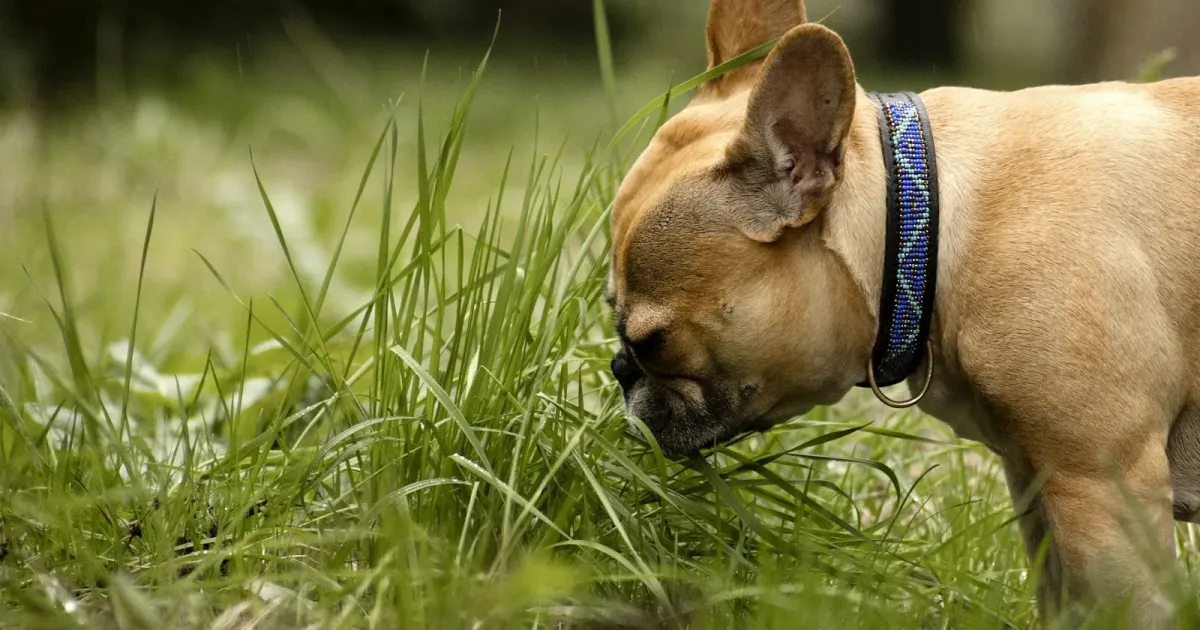
Why do dogs eat grass? Most owners have watched it happen on a walk: the nose goes down, the teeth start working, and a mouthful of lawn disappears. The popular story says dogs graze to make themselves throw up when they feel unwell.
The research is more reassuring. Below is what the best-known study found, the reasons vets take seriously, and the real risks, which come mostly from lawn chemicals, toxic plants and other animals' droppings.
Quick facts
In a 2008 internet survey, 1,571 dog owners met the study's criteria, and 68% said their dogs ate plants daily or weekly (Applied Animal Behaviour Science).
Grass was the plant eaten most often by 79% of those dogs (Applied Animal Behaviour Science).
Only 9% often seemed ill before eating plants, and 22% often vomited afterward (Applied Animal Behaviour Science).
Younger dogs ate plants more often and were less likely to vomit afterward (dvm360).
Plant material has turned up in 2% to 74% of wolf and cougar scat and stomach samples, depending on the study (dvm360).
What does the research say about dogs eating grass?
The research says grass eating is a common habit of normal dogs and usually isn't tied to illness. The study most people cite comes from the University of California, Davis School of Veterinary Medicine. Karen Sueda, Benjamin Hart and Kelly Cliff published it in Applied Animal Behaviour Science in 2008.
Of 47 owners at the UC Davis veterinary hospital whose dogs had daily access to plants, 79% said their dog ate grass or other plants. The team then ran an internet survey. It drew 3,340 replies, and 1,571 met the enrollment criteria.
In that larger group, most plant eaters looked healthy before grazing and kept their meal down afterward. Age made a difference too. Younger dogs grazed more and were less likely to seem ill first or vomit later. The authors found no clear link between plant eating and illness or a missing nutrient.
Why is my dog eating grass? The leading explanations
No single cause has been proven, and one dog may graze for different reasons on different days. These are the explanations vets and researchers take most seriously.
An instinct inherited from wild ancestors
Grazing seems to be part of the canine package. The American Kennel Club calls it a possible echo of dogs' wild ancestry. VCA Animal Hospitals links it to the scavenging diet of their forebears.
Hart's team has a more specific idea. In wild canids (the dog family, including wolves), regular plant eating may have helped push intestinal worms out. Plant material speeds up the gut and can wrap around worms on the way through, according to dvm360's report on the work. Young animals carry more parasites, which would fit the finding that young dogs graze more. It's still a hypothesis, but it explains why a well-fed dog might keep the habit.
Fiber and digestion
Grass is roughage, and some dogs may be after the fiber. VCA notes that a lack of fiber affects how well a dog digests food and passes stool. The AKC also lists fiber and suggests asking your vet about diet if you think something is missing.
Boredom, loneliness or anxiety
A dog left alone in a yard with nothing to do may chew grass to pass the time. VCA lists boredom, loneliness and anxiety among the causes, and adds that some dogs graze to get their owner's attention. If your dog also gets vocal when left alone, our piece on why dogs howl covers the separation side of things.
They just like it
Plenty of dogs seem to enjoy the taste and texture, especially fresh spring growth. The AKC includes this on its list, and for many dogs it's probably the simplest answer.
An upset stomach, sometimes
The upset-stomach idea fits a minority of dogs. Around one in five in the UC Davis survey often vomited after grazing. The AKC says a dog with an empty stomach may eat grass to settle irritation from bile, and that smaller, more frequent meals can help.
Why does my dog keep eating grass like crazy?
A dog that suddenly eats grass frantically may feel nauseous or uncomfortable, though boredom and anxiety can also drive it. The AKC advises calling your vet if increased grass eating comes with vomiting, diarrhea, weight loss, appetite changes, bloody stool, lethargy or lip licking.
VCA says stomach discomfort can point to conditions such as gastric reflux, inflammatory bowel disease or pancreatitis (inflammation of the pancreas). Repeated lip licking is worth watching on its own, too, and our guide to why dogs lick explains what it can mean.
When grass eating turns compulsive and spreads to other non-food items, the AKC calls it pica. It can sometimes be traced to a gap in the diet.
Dog eating grass and throwing up foam: what does it mean?
White foam is usually stomach acid, gas and saliva from an empty, irritated stomach. The AKC's guide to dogs throwing up foam says that yellow foam is usually bile, which also shows up when the stomach is empty.
That fits the AKC's grass article, which says some dogs graze when bile is bothering an empty stomach. Researchers still can't say whether grass causes the vomiting or whether queasy dogs reach for grass first.
The same AKC foam guide lists warning signs that need a vet straight away:
Frequent or severe vomiting, or not keeping down food or water
Blood in the vomit, or vomit that looks like coffee grounds
A bloated or swollen belly
Retching with nothing coming up
Repeated foamy vomit along with pacing or discomfort
Weakness, lethargy, signs of pain, or fast or shallow breathing
A bloated belly and unproductive retching matter most. They can signal bloat, where the stomach fills with gas and can twist on itself.
Can dogs eat grass safely?
Yes, a healthy dog nibbling untreated grass is usually fine. The bigger risks are what's sprayed on the grass, what grows next to it and what other animals left behind.
Lawn chemicals and fertilizer
Herbicides and pesticides on treated lawns can be toxic to dogs, as both VCA and the AKC warn. The ASPCA says eating fertilizer can cause vomiting, diarrhea, and weakness or stiffness in the back legs.
According to ASPCA Pro, many fertilizers contain bone meal, fish meal or blood meal, so they smell like food. Most cases cause mild stomach upset. Products with added herbicides or insecticides are more worrying, and moldy fertilizer can carry toxins that cause tremors and seizures.
Toxic garden plants
A dog that grazes may sample other plants too. The ASPCA flags several common ones:
Sago palm, which is very toxic and can cause liver failure and death
Tulips, hyacinths and irises, with the bulbs carrying the most toxin
Daffodils, which can cause vomiting and, after larger bulb amounts, rarely seizures
Fall crocus, which is far more dangerous than spring crocus and can damage the liver and kidneys
Parasites
Grass can be contaminated by other animals' droppings. VCA and the AKC both say dogs can pick up roundworms and hookworms this way. If your dog goes for the droppings themselves, see our guide on why dogs eat poop.
How can you stop a dog from eating grass?
You don't need to stop occasional grazing on clean grass, but more activity and company usually cut it down. VCA suggests redirecting with treats, praise or a verbal cue, plus plenty of exercise and mental stimulation. These steps follow that advice and the AKC's:
Add walks, play and puzzle toys so your dog has less reason to graze from boredom.
Spend time outside with your dog instead of leaving them alone in the yard.
Ask your vet whether your dog's food suits them, fiber included.
Try smaller, more frequent meals if your dog grazes on an empty stomach.
Teach a "leave it" cue and reward your dog for walking past the grass.
When to see a vet about grass eating
Occasional grazing in a bright, healthy dog isn't a worry. Call your vet if you see:
Vomiting after most grazing sessions
A sudden jump in how much or how urgently your dog eats grass
Diarrhea, bloody stools, weight loss or a smaller appetite
Lethargy or repeated lip licking
Signs of belly pain or discomfort
Eating stones, soil, fabric or other non-food items
Frequently asked questions
What does it mean when dogs eat grass?
When dogs eat grass, it usually means nothing is wrong. A 2008 UC Davis survey found 68% of dogs ate plants daily or weekly, and most showed no sign of illness. Instinct, fiber, boredom and taste are the likely reasons.
Can dogs eat grass without getting sick?
Dogs can usually eat untreated grass without getting sick. The main dangers are herbicides, pesticides, fertilizer, toxic garden plants and parasites from other animals' droppings. Let your dog graze only where you know the ground is clean.
Why does my dog keep eating grass and throwing up?
About 22% of dogs in the UC Davis survey often vomited after eating plants, so some vomiting does happen. Researchers don't know whether grass triggers the vomiting or whether dogs that already feel queasy eat grass. Frequent vomiting is a reason to see your vet.
Why is my dog suddenly eating grass like crazy?
A dog suddenly eating grass like crazy may have nausea or stomach discomfort, especially if lip licking or vomiting comes with it. Boredom and anxiety can also cause a burst of grazing. If the frantic grass eating is new for your dog, check in with your vet.
Does a dog eating grass mean something is missing from its diet?
The UC Davis researchers found no clear link between grass eating and a nutritional gap. The AKC notes that fiber or a dietary gap may play a part in some dogs, so it's worth asking your vet whether your dog's food is a good fit.
Is it bad if my dog throws up white foam after eating grass?
A single bout of white foam is often stomach acid and saliva from an empty stomach. Repeated foamy vomiting, a swollen belly, retching with nothing coming up, or lethargy needs a vet right away. Those signs can point to bloat or another serious problem.
Curious about other canine habits? Browse more dog behavior articles.
Sources
Characterisation of plant eating in dogs, Applied Animal Behaviour Science
Why do dogs and cats eat grass?, dvm360
Why dogs eat grass, VCA Animal Hospitals
Why does my dog eat grass?, American Kennel Club
Why is my dog throwing up white foam?, American Kennel Club
Gardening safety 101: your guide to keeping your pet safe, ASPCA
Fertilizers: a growing problem for pets, ASPCA Pro



Comments