
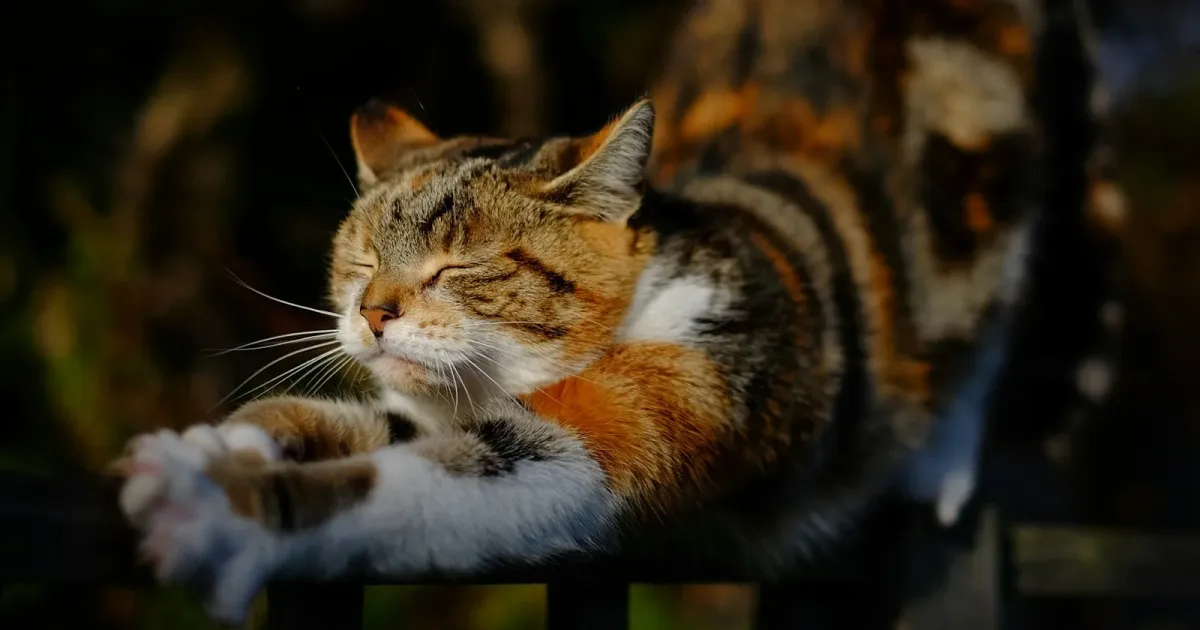
Why do cats make biscuits? That push-push of the front paws, which looks a lot like someone working bread dough, goes back to the first weeks of a cat's life. An adult cat doing it on your lap isn't hungry or confused. Most of the time, they're just very comfortable.
Cat kneading gets less research attention than you might expect. Kansas State University veterinarian Susan Nelson told Scientific American that cats don't get the study funding dogs do. What follows is the best current explanation from vets and behavior scientists, with the gaps left in.
Quick facts about cat kneading
Kittens knead their mother while nursing to stimulate milk production (VCA Animal Hospitals).
Kneading is thought to stimulate oxytocin, a hormone involved in bonding between a mother cat and her kittens (VCA).
Cats have scent glands between their paw pads, so kneading can leave a scent mark (PetMD).
Some cats knead their whole lives, and others stop after kittenhood (PetMD).
A sudden rise or drop in kneading can be a sign of illness, according to the American Animal Hospital Association (AAHA).
What does it mean when cats make biscuits?
When a cat makes biscuits, it presses its front paws into something soft, one paw after the other, often while purring. Some cats push their claws out on each press and pull them back on the release. Others keep their claws tucked in the whole time.
Blankets, pillows, sweaters, other pets and laps all get the treatment. Kneading is instinctive. The vets and behaviorists Scientific American spoke to describe it as a feeding instinct that kittens are born with.
Not every cat kneads. PetMD notes that some cats keep doing it all their lives while others drop it once they grow up. A cat who never makes biscuits can be every bit as attached to you as one who does.
Why do cats knead? The main reasons
Vets point to several overlapping explanations, and more than one can apply to the same cat. The nursing link has the widest support. The others are reasonable ideas that are harder to test.
It starts with nursing
Kneading begins at the milk bar. Kittens knead their mother's belly while they nurse, which helps the milk flow. VCA Animal Hospitals adds that the motion is thought to trigger oxytocin, a hormone tied to the bond between mother and kittens.
Adult cats keep a lot of kitten behavior, a trait called neoteny (holding on to juvenile traits as an adult). Kristyn Vitale, a certified applied animal behaviorist at Unity Environmental University, told Scientific American that these kitten behaviors may now be aimed at the owner. So when your cat kneads your lap, you may be standing in for mom.
It signals contentment
Because kneading is tied to the warm, safe feeling of nursing, it tends to show up when a cat is relaxed. VCA says a kneading cat is usually comfortable and at ease. Vitale links it to happiness and feeling safe.
Some cats get so relaxed that they drool while they knead. Nelson mentions this as a sign of a very contented cat. If you also hear a rumble, that fits: purring often goes with kneading, as we explain in why cats purr.
It leaves their scent
Cats carry scent glands in their paws, and both VCA and AAHA list scent marking as a reason cats knead. Each press may leave a chemical signal that other cats can pick up and you can't.
That may explain why cats knead the same favorite blankets, beds and people over and over. Those things end up smelling familiar, which helps a cat feel at home. Cats use familiar spots in other ways too, as in why cats like boxes.
It makes a bed
Wild cats knead grass to make a comfortable resting place, according to AAHA, and PetMD and VCA describe the same nest-making idea. Many house cats knead a blanket, turn around once or twice and then lie down. That's a lot of bed-making for an animal that spends much of the day asleep, as we cover in why cats sleep so much.
This idea is hard to test, so treat it as a reasonable guess.
It's a good stretch
Kneading works the muscles of the front legs and paws. PetMD lists stretching and easing tension in the limbs as part of the appeal. Watch a cat wake from a nap and you'll often see a few presses mixed in with a big full-body stretch.
Why do cats make biscuits on me?
Cats knead people they trust. AAHA says cats knead favorite people or pets to show affection, the way they did with their mothers. VCA notes that cats don't usually knead animals or humans they don't like.
Your lap also checks every box for a kneading spot. It's soft and warm, and it smells like someone the cat knows. Add the nursing link and the scent marking, and you become prime biscuit territory.
Cats differ in what they want during a session. Vitale points to a lot of individual variety: some cats like to be stroked while they knead, some like to be talked to and some want to be left alone. If the ears turn back or the tail starts to twitch when you pet them, give them space.
Why do cats knead blankets?
Cats knead blankets because soft, warm fabric is the closest thing in the house to a mother cat's belly. A blanket also holds scent well, so the more a cat kneads it, the more it smells like theirs. PetMD lists blankets, beds and other soft objects among cats' favorite kneading targets.
Some cats suck or chew on a blanket or a wool sweater while they knead. People often blame this on early weaning. A 2017 paper in Scientific Reports looked at survey data on 5,726 cats. The team, from the Folkhälsan Institute of Genetics in Helsinki, found that weaning before 8 weeks raised the risk of aggression. Cats weaned after 14 weeks were less likely to groom excessively than cats weaned at 12 weeks. The authors suggested later weaning as a cheap way to improve cat welfare.
That study didn't look at kneading, though. A cat who kneads blankets wasn't necessarily weaned too young.
How do you live with a cat who kneads?
Don't punish it. PetMD says a cat should never be punished for kneading, and AAHA recommends redirecting the habit instead. A few changes can make it more comfortable for both of you:
Trim your cat's claws regularly. VCA and AAHA both recommend short nails to protect skin and furniture.
Put a thick, plush blanket on your lap. AAHA suggests picking one as the official kneading surface.
Redirect gently. If you need to stop a session, lift your cat onto that blanket or a bed of their own.
Offer scratching posts. AAHA recommends several around the home to give claws and energy another outlet.
When should you see a vet about kneading?
Kneading on its own is rarely a medical problem, but a change in kneading is worth a vet visit. AAHA says kneading much more than usual, or suddenly much less, may point to illness. PetMD adds that heavy kneading can be a sign of discomfort, anxiety or a compulsive behavior problem, and that cats with arthritis or injuries may knead to ease muscle tension. VCA notes that cats who feel unwell may purr and knead to soothe themselves.
Book a check-up if you notice:
Kneading that is suddenly much more frequent, frantic or hard to interrupt
A cat who always kneaded and has abruptly stopped
Kneading in unusual places or patterns
Other big changes in behavior at the same time, which AAHA says call for a vet visit
Stiffness or limping, since PetMD notes that cats with arthritis or injuries may knead more
Sucking that leads to swallowing fabric or other non-food items
Your vet can rule out medical causes first and, if needed, refer you to a qualified behaviorist. For more on cat quirks, browse all our cat behavior articles.
Frequently asked questions
Why do cats knead?
Cats knead because the behavior starts as a nursing reflex, when kittens press their mother's belly to get milk flowing. Adult cats keep kneading when they feel relaxed, and the motion also stretches their legs and leaves scent from glands in their paws.
What does it mean when cats make biscuits?
When cats make biscuits, it usually means they feel comfortable and safe. VCA Animal Hospitals says a kneading cat is typically relaxed, and cats rarely knead people or animals they don't like.
Why do cats make biscuits on me?
Cats make biscuits on people they trust. AAHA says cats knead favorite people to show affection, the way they kneaded their mothers, and the kneading may also mark you with the cat's scent.
Why do cats knead blankets?
Cats knead blankets because soft fabric feels like the mother's belly they kneaded as kittens. Kneading also leaves the cat's scent on the blanket and may help shape a comfortable place to lie down.
Why do cats knead on you and drool?
Some cats drool while kneading on you when they are especially content. Kansas State University vet Susan Nelson has described this as a sign of a very happy cat.
Is a lot of cat kneading a sign of stress?
Cat kneading is usually a sign of comfort, but a sudden change can mean something is wrong. AAHA advises a vet visit if a cat starts kneading much more or much less than usual, and PetMD links excessive kneading to anxiety or discomfort.
Sources
Why Do Cats Knead like They're Making Biscuits?, Scientific American
Why do cats knead? (Or, the art of biscuit making!), VCA Animal Hospitals
Is my cat's kneading normal?, American Animal Hospital Association
Why Do Cats Knead?, PetMD
Early weaning increases aggression and stereotypic behavior in cats, Scientific Reports


Comments