
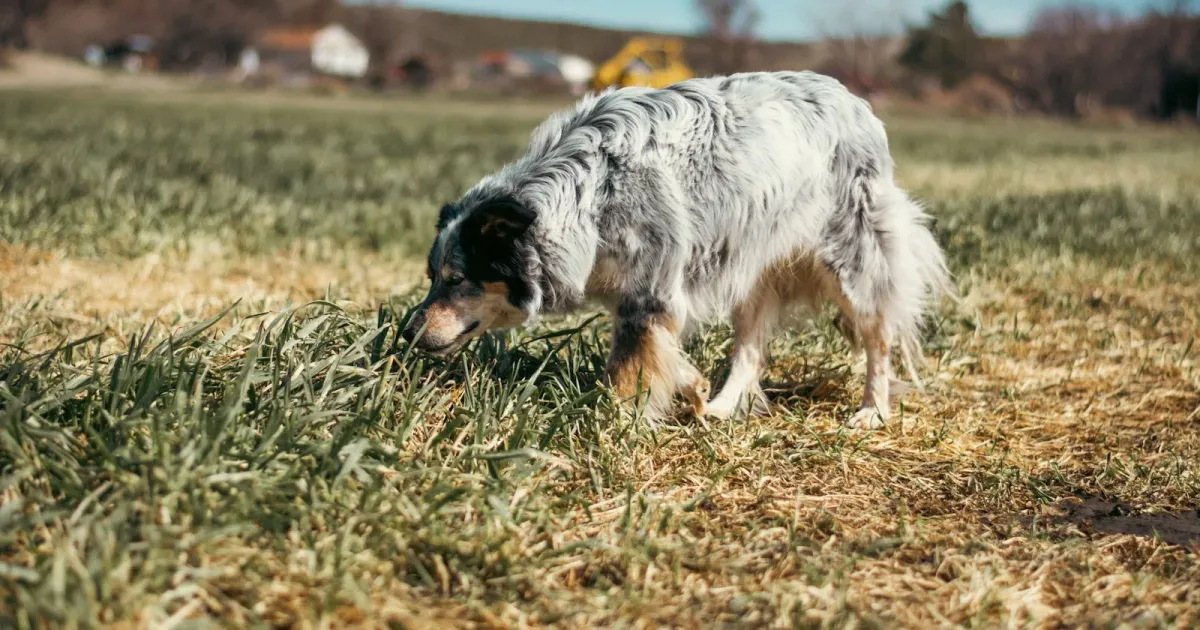
So why do dogs eat poop? Vets call the habit coprophagia. It's far more common than most owners realize, and it's one of the hardest habits to break.
Below we cover what the best-known research found, why a dog might go for the litter box, and which medical problems a vet will want to rule out. Then we look at the real risks and the prevention steps most likely to work.
Quick facts
About 16% of dogs eat stool frequently, and 23% have been seen doing it at least once, per a Psychology Today summary of the 2018 UC Davis study.
More than 80% of those dogs ate only stools no more than two days old (Psychology Today).
In the same study, behavior fixes worked for only 1 to 4% of dogs, and food additives for 0 to 2% (dvm360).
Most puppies stop eating poop before they're about nine months old, says the American Kennel Club.
A 2026 study of 44 healthy dogs found no difference in gut bacteria between poop eaters and other dogs (Animals, 2026).
Why do dogs eat poop, even their own?
The leading explanation is an inherited cleaning instinct, though hunger, boredom and early habits play a part in some dogs. There's no single cause, and one dog may have several reasons at once.
What the UC Davis study found
The largest study on the question came from Benjamin Hart and colleagues at the University of California, Davis. They published The paradox of canine conspecific coprophagy in Veterinary Medicine and Science in 2018. "Conspecific" means dogs eating the feces of other dogs, including their own.
The team ran two online surveys. The first compared 1,552 dogs that did and didn't eat stool. The second gathered 1,475 responses from owners of dogs that did. According to dvm360's summary, being a "greedy eater" was the strongest difference between the two groups. Poop eaters were also more likely to live with other dogs.
Terriers and hounds were the breed groups most likely to do it. Sex, neutering, age, diet and ease of house training showed no meaningful link.
A den-cleaning instinct from wolves
The preference for fresh stool is the main clue. Hart's team pointed out that parasite eggs in feces aren't infective at first and can develop infective larvae after about two days. A wolf that ate fresh droppings near the den would clear them away before they became a risk to the pack.
On this view, eating poop is a leftover hygiene behavior. It's a hypothesis, but it fits the survey data better than the old idea that dogs are making up for missing nutrients.
Mother dogs and puppies
A new mother licks her puppies to make them pee and poop, then swallows the waste. The American Veterinary Society of Animal Behavior (AVSAB) describes this as normal maternal care. The AKC says mothers do this for about the first three weeks. Puppies often eat stool too, and most grow out of it.
Hunger, boredom and attention
Dogs are scavengers, and to many of them fresh stool smells like food. PDSA, a UK veterinary charity, says dogs may eat poop if they're underfed, suddenly exercising more, or on a medicine that raises their appetite.
The AKC lists other behavioral triggers: isolation, confinement to a small space, anxiety after harsh house training, and attention seeking. Feeding a dog too close to where it toilets can also blur the line between food and feces.
Habits learned early
The Merck Veterinary Manual notes that pet store puppies spend a lot of time in cages and may have learned to play with or eat feces. By the time they reach a home, the habit can be well set.
Why is my dog eating poop all of a sudden?
A dog that starts eating poop as an adult may have a medical problem, so a vet check comes first. The AKC lists these possible medical triggers:
Intestinal parasites
Malabsorption, where the gut doesn't absorb nutrients properly
Diabetes
Thyroid disease
Cushing's disease
Steroid medicines, which can increase appetite
Diets short on nutrients or calories
One condition is worth singling out. In exocrine pancreatic insufficiency (EPI), the pancreas doesn't make enough digestive enzymes. The Purina Institute lists coprophagia among reported signs. Others include weight loss despite a normal or bigger appetite, and large, fatty stools.
Why do dogs eat cat poop?
Many dogs find cat poop more tempting than their own, mostly because of what's in it. Blue Cross, a UK animal charity, says cat poo is high in protein and fat, which plenty of dogs will scavenge. A litter box full of fresh droppings is an easy buffet.
The fix that works is putting the box out of the dog's reach. AVSAB advises placing litter boxes where the cat can get in easily and the dog can't. PDSA suggests a raised spot, a cat-only room, or a top-entry box. The AKC adds self-cleaning boxes and dog gates as options.
There's a health angle too. The American Veterinary Medical Association (AVMA) says roundworms, hookworms, tapeworms, coccidia and Giardia infect both cats and dogs. Pets catch roundworms by swallowing eggs from feces-contaminated soil or water.
Is a dog eating poop dangerous?
Often it causes no obvious harm, but parasites are the main worry. PDSA says poop eating doesn't often cause health problems. The 2026 Animals study of 23 poop-eating and 21 non-poop-eating dogs found no meaningful differences in gut bacteria or common gut pathogens. That study didn't test for parasites, though, and the authors named that as a limit.
Cornell's Riney Canine Health Center says Giardia cysts shed in stool can survive in the environment for months. A dog that eats the droppings of unknown dogs or wildlife is taking a bigger gamble than one that eats its own.
Blue Cross adds two more risks: an upset stomach, and horse or livestock manure that may contain worming medicine that's dangerous for dogs.
How to stop a dog from eating poop
Keeping stool out of reach works far better than any training trick or food additive. In the Hart study, behavior fixes succeeded for only 1 to 4% of dogs. So plan on management first and training second.
Ask your vet to check for parasites and medical causes before you start.
Pick up after your dog right away, at home and on walks.
Move the litter box somewhere your dog can't reach.
Keep your dog on a leash where other dogs or wildlife leave droppings.
Teach a solid "leave it" and a recall, and reward your dog for coming to you right after it toilets.
Give more exercise and enrichment. AVSAB recommends at least 30 minutes of aerobic activity a day.
Feed a suitable amount of a complete diet, and ask your vet whether more frequent meals would help a hungry dog.
Keep feeding areas away from toilet areas, as the AKC suggests.
Do home remedies stop dogs eating poop?
Mostly, no. Owners often try pineapple, courgette (zucchini) or commercial chews meant to make stool taste bad. PDSA says there's no evidence pineapple or courgette works. AVSAB mentions that some owners report pineapple helped, but those are owner reports.
The Hart survey is the best test we have, and it found additives and tablets worked for 0 to 2% of dogs. The AKC notes that if you try a taste deterrent, every pet in the house has to get it. Talk to your vet before adding anything to your dog's food.
When to see a vet
See a vet when poop eating comes with other signs, or appears out of nowhere in an adult dog. Book a visit if your dog:
Starts eating poop suddenly as an adult
Seems hungry all the time, or loses weight while eating well
Has diarrhea, large greasy stools or bloody stools
Is vomiting or unusually tired
Eats other non-food items such as stones or fabric
Is on medication that may have raised its appetite
Your vet may test a stool sample for parasites and run blood tests for conditions such as diabetes, thyroid disease or EPI.
Dogs put plenty of odd things in their mouths. If yours also likes to graze, read why dogs eat grass. For other dog habits, see why dogs lick you and why dogs howl, or browse all our dog articles.
Frequently asked questions
Why do dogs eat their own poop?
Dogs most likely eat their own poop because of a cleaning instinct inherited from wolves. A 2018 UC Davis study found most poop-eating dogs choose fresh stool, which fits the idea that wolves cleared droppings from the den before parasite eggs became infective. Hunger, boredom and medical problems can also play a part.
Why is my dog eating poop all of a sudden?
A dog that suddenly starts eating poop may be hungry or have a medical problem. The AKC lists parasites, malabsorption, diabetes, thyroid disease, Cushing's disease and steroid medicines as possible triggers. A vet check is the first step.
Why do dogs eat cat poop?
Dogs eat cat poop mainly because it smells and tastes like food to them. Blue Cross says cat poo is high in protein and fat. Putting the litter box where the cat can reach it and the dog can't is the most reliable fix.
Will my puppy grow out of eating poop?
Most puppies do grow out of eating poop. The AKC says the habit usually fades before a puppy is about nine months old. Pick up promptly and teach "leave it" so the habit doesn't stick.
Does eating poop mean my dog is missing nutrients?
Eating poop usually doesn't mean a dog is missing nutrients. The Hart study found no link with diet, and Blue Cross calls the nutrient idea a common misconception. Conditions that affect digestion, such as EPI, can trigger it, so ask your vet if you're unsure.
Do home remedies like pineapple stop a dog from eating poop?
Home remedies like pineapple rarely stop a dog from eating poop. PDSA says there's no evidence pineapple works, and in the 2018 Hart survey food additives and tablets succeeded for only 0 to 2% of dogs. Keeping stool out of reach works far better.
Sources
The paradox of canine conspecific coprophagy, Veterinary Medicine and Science (Hart et al., 2018)
Which Dogs Eat Poop and Why Do They Do It?, Psychology Today
Why Dogs Eat Poop and How to Stop It, American Kennel Club
Coprophagia: My Dog Eats His Own Waste, American Veterinary Society of Animal Behavior
Why do dogs eat poo?, PDSA
Why does my dog eat poop?, Blue Cross
Behavior Problems in Dogs, Merck Veterinary Manual
Exocrine Pancreatic Insufficiency, Purina Institute
Coprophagy in Healthy Dogs Does Not Alter Fecal Core Microbiota or Increase Carriage of Enteropathogens, Animals (2026)
Intestinal parasites in cats and dogs, American Veterinary Medical Association
Giardia: infection, treatment and prevention, Cornell Riney Canine Health Center


Comments