
If your cat sprints down the hallway at 5 a.m. or starts batting things off the nightstand around dusk, you're not imagining it. Cats do run on a different clock from people.
So are cats nocturnal, active all night like owls? Not quite. Cats are built for twilight, the dim hours around sunrise and sunset. Here's what the Merck Veterinary Manual, VCA, the ASPCA and International Cat Care say about why cats keep these hours and what you can do when the schedule clashes with yours.
Quick facts
In their natural environment, cats spend much of their active time in poor light at dawn and dusk, says International Cat Care.
Cats can see about 6 times better than people in dim light, according to the Merck Veterinary Manual.
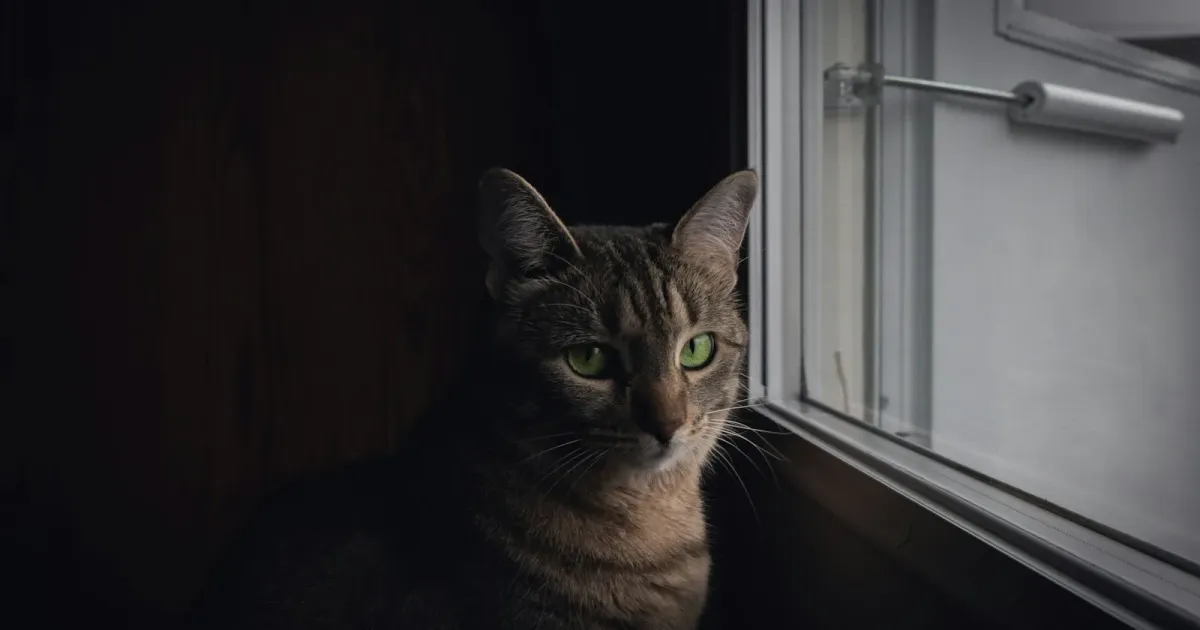
A reflective layer behind the retina, the tapetum lucidum, gives cats' eyes their green or blue glow at night (Merck).
Cats can hear sounds up to about 64,000 hertz, around 1.6 octaves higher than people can (VCA Animal Hospitals).
VCA says increased vocalizing, especially at night, is one sign of hyperthyroidism in cats (VCA).
Are cats nocturnal or crepuscular?
Cats are crepuscular, not nocturnal in the strict sense. Crepuscular animals are most active in twilight, around dawn and dusk, while nocturnal animals are active through the night.
International Cat Care (iCatCare), a UK feline welfare charity, says cats in their natural environment spend much of their active time in poor light at dawn and dusk. VCA Animal Hospitals describes cats as well suited to hunting in the evening, at night and in the early morning.
So cats aren't strictly nocturnal, but they aren't daytime animals either. They're flexible. A pet cat may nap through the afternoon, wake up hungry at dusk, stay active into the evening and be up again before sunrise.
Why are cats most active at dawn and dusk?
Cats are most active at dawn and dusk because those are good hunting hours for a small predator. Their senses work well in low light, which gives them an edge.
VCA explains that cats' superior night vision makes them naturally suited to hunting in low light. Daylight favors human eyes, while dim light favors a cat's.
The timing also shapes how cats communicate. iCatCare points out that because cats are often active in poor light, sound is an especially useful way to pass messages. That's one reason cats have one of the widest vocal ranges among carnivores, from purrs and trills to growls and yowls. Learn more about one of those sounds in why cats purr.
How well can cats see at night?
Cats see far better than people at night, though they still need a little light. The Merck Veterinary Manual says they see about 6 times better than we do in dim light.
Three features of the cat eye do most of the work:
Lots of rod cells, the light-sensitive cells in the retina that are good at collecting dim light (Merck)
Pupils that open very wide in the dark to let in more light (Merck and VCA)
The tapetum lucidum, a reflective layer that magnifies incoming light and makes cats' eyes glow at night (Merck)
Color vision is a separate story, which we explain in what colors cats can see. For more on how far that night vision goes, read can cats see in the dark.
Hearing helps too. VCA says cats can hear up to about 64,000 hertz, compared with about 20,000 hertz for people.
Why is my cat so active at night?
Your cat may be active at night because its natural rhythm peaks at dusk and dawn, and because it has slept much of the day. Hunger, boredom and loneliness add to it.
Indoor cats don't need to hunt, yet many still keep twilight hours. If a cat has been alone all day, evening may be when it finally has company to demand things from. The ASPCA lists hunger, attention seeking and loneliness among the main reasons cats meow and demand interaction.
Cats also nap a lot between those active spells. We cover the reasons in why cats sleep so much.
Why does my cat wake me up so early?
Your cat probably wakes you early because dawn is one of its most active times and breakfast comes from you. If meowing gets a response, the habit sticks.
iCatCare notes that people often reinforce meowing, which is how cats come to use it with us so much. A cat that gets fed after yelling at 5 a.m. learns that yelling at 5 a.m. works. Our guide to why your cat is meowing so much goes deeper into what each kind of meow can mean.
How can I get my cat to sleep at night?
You can't turn a cat into a night sleeper, but you can make nights calmer. Meet your cat's needs on your schedule and stop rewarding nighttime demands.
These steps come from the ASPCA's advice on attention and food meowing:
Use an automatic feeder set to open at specific times, so your cat meows at the feeder instead of at you.
Don't respond to meows for attention. Give attention when your cat is quiet.
If your cat is lonely during the day, consider a pet sitter or more interaction.
Never punish your cat. The ASPCA says punishment makes cats afraid without fixing the behavior.
Play also helps meet a cat's predatory needs. The Merck Veterinary Manual suggests keeping several toys that interest your cat and rotating them until the cat's interest wanes. An evening play session fits naturally with a cat's dusk peak.
When night activity can mean a health problem
New or increased nighttime activity can be a sign of illness, especially in older cats. Call your vet if the change is sudden or comes with other signs.
VCA lists increased vocalizing, particularly at night, and restlessness among the signs of hyperthyroidism, an overactive thyroid that usually affects middle-aged and older cats. The ASPCA says older cats with cognitive dysfunction, a feline form of dementia, may meow when they become disoriented. Merck describes the condition as causing disorientation, agitation, anxiety and personality changes.
See a vet if you notice any of these along with more night activity:
Weight loss despite a bigger appetite
Drinking and urinating more
Vomiting or diarrhea
Restlessness, crankiness or aggression
Confusion, getting lost at home or soiling outside the litter box
New loud crying at night in a senior cat
Frequently asked questions
Are cats nocturnal?
Cats are not strictly nocturnal. Cats are crepuscular, which means they are most active at dawn and dusk, though they can also be active at night.
What does crepuscular mean for cats?
Crepuscular means an animal is most active during twilight, around sunrise and sunset. For cats, this means bursts of play, hunting and meowing in the early morning and evening.
Can cats see in the dark?
Cats need at least a little light to see, but they see about 6 times better than people in dim light. Cats have many rod cells, wide pupils and a reflective tapetum lucidum that help them use what little light there is.
Why does my cat get the zoomies at night?
A cat often gets the zoomies at night because evening is one of its natural active periods. Hunger, boredom and loneliness can also push a cat to demand food, play or attention after dark.
Are indoor cats nocturnal?
Indoor cats are not strictly nocturnal either. Indoor cats have the same eyes and instincts as other cats, and many are lively in the early morning and evening.
Should I worry if my older cat is up all night?
An older cat that is suddenly up and vocal all night should see a vet. Hyperthyroidism and cognitive dysfunction can both cause restlessness and nighttime crying in senior cats.
More cat behavior explained in our cats section.
Sources
Cat communication, International Cat Care
Eye Structure and Function in Cats, Merck Veterinary Manual
Behavior Problems in Cats, Merck Veterinary Manual
How your kitten's senses differ from yours, VCA Animal Hospitals
Hyperthyroidism in Cats, VCA Animal Hospitals
Meowing and Yowling, ASPCA



Comments