
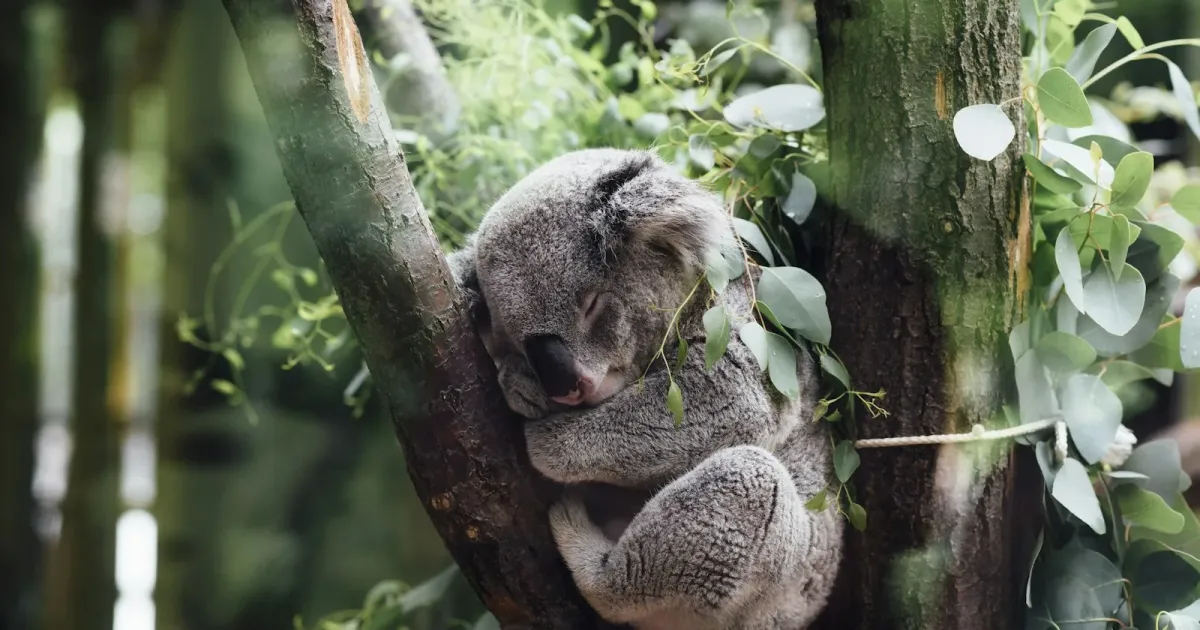
Koalas look like the calmest animals in Australia, but many of them are fighting a serious bacterial infection. So do koalas have chlamydia? A large share do, and the disease is one of the reasons several koala populations are shrinking.
The bacteria scar the eyes, bladder and reproductive tract. A koala that goes blind struggles to find food. A female with reproductive damage may never have a joey. Here's what scientists know about where the infection came from, how it spreads and what's being done about it.
Quick facts
Infection rates in Queensland, New South Wales and Victoria range from 0% on some island populations to 100% elsewhere, according to a 2014 Veterinary Microbiology paper.
Chlamydia pecorum is the most common and most harmful chlamydia species in koalas, followed by Chlamydia pneumoniae (same paper).
Up to half of koalas in South-east Queensland have reproductive disease likely to cause infertility, says the Australian Government species profile.
University of the Sunshine Coast researchers linked the koala strain to livestock brought to Australia in the late 1780s, reports the Australian Academy of Science.
In 2014 a team led by Professor Peter Timms vaccinated 30 wild koalas near Brisbane in a field trial, ABC News reported.
Do koalas have chlamydia, and which kind?
Yes, and it's mostly a species called Chlamydia pecorum. A 2014 study by Burach and colleagues in Veterinary Microbiology names it the most prevalent and most virulent (disease-causing) chlamydia in koalas. Chlamydia pneumoniae comes second.
The same paper notes that koalas also carry other chlamydia-related bacteria. Scientists haven't grown those in the lab or formally classified them yet.
The human sexually transmitted infection is a different species. The CDC names Chlamydia trachomatis as the cause of chlamydia in people. So the koala disease and the human STI share a family name, but they're caused by different bacteria.
How do koalas get chlamydia?
Koalas mostly catch chlamydia through mating and from mother to joey. The Burach team describes those two routes based on what vets see in the field. An ABC Science report from 2012 adds that it spreads during birth and mating, and possibly through fighting.
Stress may make things worse. The Australian Government's koala profile says there's circumstantial evidence that chlamydiosis (the disease caused by chlamydia) increases when koalas face overcrowding and poor nutrition. It also admits the disease's spread isn't well understood.
Where did koala chlamydia come from?
Scientists aren't fully sure, and the sources disagree. Research from the University of the Sunshine Coast, summarized by the Australian Academy of Science, found that the same strain can infect both koalas and sheep. The team concluded the pathogen most likely arrived with infected livestock in the late 1780s and then spread to koalas.
The 2012 ABC report was more cautious. It said chlamydia may have come with sheep brought by European settlers, or it may always have been in Australia. The genetic work suggests the livestock link, but older ideas haven't been ruled out completely.
What does chlamydia do to a koala?
Chlamydia attacks a koala's eyes, urinary tract, reproductive tract and lungs. The government species profile lists infections in all four systems.
The signs vets look for include:
Inflamed, weepy eyes that can scar and lead to blindness
A brown-stained, wet rump from urinary tract disease, often called "wet bottom" or "dirty tail"
Incontinence, meaning the koala can't control its bladder
Painful cysts in the female reproductive tract, which can cause infertility
Blindness is especially dangerous for koalas. ABC News reported that blind males have trouble feeding. Infertile females can't add joeys to the population, which is why the disease matters so much for conservation and not only for individual animals.
Why does chlamydia hit koalas so hard?
Researchers think a second infection makes it worse. Koala retrovirus, or KoRV, is a virus passed from parents to offspring through their genes, and it can also spread through close contact and milk. The Australian Government profile says up to 100% of koalas in Queensland and New South Wales carry KoRV.
KoRV is thought to cause leukemia and an immunodeficiency syndrome, a condition that weakens the immune system. A koala with a weaker immune system may have a harder time fighting chlamydia. Scientists are still working out exactly how the two infections interact.
What percentage of koalas have chlamydia?
There's no single number, because the infection rate depends heavily on where the koalas live. Burach and colleagues found rates ranging from 0% to 100% across Queensland, New South Wales and Victoria.
The disease-free groups are some isolated island populations. Those were started by moving koalas that were presumably healthy and chlamydia-free. On the mainland the picture is very different:
The 2012 ABC report said about 30 to 40% of the Gold Coast population was infected.
The government species profile says up to half of koalas in South-east Queensland have reproductive disease likely to cause infertility.
ABC News reported in 2014 that chlamydia causes about half of all koala deaths.
That last figure comes from a news report, and it may vary by region. Even so, every source agrees that chlamydia is one of the biggest health problems koalas face.
Can koala chlamydia be treated or prevented?
Vets treat sick koalas with antibiotics, but antibiotics don't always clear the infection. The Burach paper notes that antibiotic levels that cure genital infections don't cure chlamydia living in the gut.
A vaccine is the bigger hope. Professor Peter Timms spent about five years developing one. After tests on captive koalas, his University of the Sunshine Coast team ran a field trial on 30 wild koalas in the Moreton Bay region north of Brisbane. ABC News reported that infected koalas given the vaccine didn't progress to disease. Three unvaccinated koalas in the comparison group developed blindness or reproductive cysts.
Timms doesn't plan to vaccinate every wild koala. In 2012 he suggested vaccinating the roughly 3,000 koalas that entered Queensland rescue centers each year, since those animals are already in human hands. The research has kept going. A 2023 paper tested the vaccine's efficacy in a wild koala population, and a 2025 paper evaluated it as a management tool for wild koalas.
Is koala chlamydia a threat to the species?
Chlamydia is one threat among several. According to the Australian Museum, koalas in Queensland, New South Wales and the ACT are federally listed as endangered. The IUCN lists the koala as vulnerable with a decreasing population, says National Geographic.
National Geographic names other threats too: land clearing, logging, the 2019 to 2020 bushfires, drought, cars and dog attacks. National Geographic says each koala needs about 100 trees, and suitable forest keeps shrinking. Since crowding and stress may worsen chlamydia, losing habitat could make the disease harder to control.
The 2012 ABC report gave a stark example. South-east Queensland's koala population had fallen from about 20,000 two decades earlier to around 2,000.
Polar bears face their own habitat squeeze in a very different climate, which we cover in where polar bears live. And if you like animals that spend their days up off the ground, read about why bats hang upside down. For a pet that's famous for napping, see why cats sleep so much. You'll find more animal stories in our wildlife section.
Frequently asked questions
Do all koalas have chlamydia?
No, not all koalas have chlamydia. Some isolated island koala populations are chlamydia-free, while some mainland populations in Queensland, New South Wales and Victoria have infection rates near 100%.
Why do so many koalas have chlamydia?
Koalas pass chlamydia during mating and from mother to joey, so the bacteria spread easily through a population. Stress from crowding and poor food may make the disease worse, and koala retrovirus may weaken koala immune systems.
Can humans catch chlamydia from koalas?
Koala chlamydia is mainly caused by Chlamydia pecorum, a different species from Chlamydia trachomatis, which causes the human STI. People get the human infection through sex with an infected partner, according to the CDC.
What are the signs of chlamydia in koalas?
Koalas with chlamydia may have inflamed or weepy eyes, a wet and stained rump often called "wet bottom," and trouble controlling their bladder. Females can develop reproductive cysts that make them infertile.
Is there a vaccine for koala chlamydia?
Yes, University of the Sunshine Coast researchers led by Peter Timms developed a koala chlamydia vaccine and tested it on 30 wild koalas in 2014. Later studies in 2023 and 2025 tested the vaccine in wild koala populations.
How did koalas get chlamydia in the first place?
Research from the University of the Sunshine Coast suggests koala chlamydia arrived with infected livestock in the late 1780s, since the same strain can infect sheep. Some earlier reports said the bacteria might have always been in Australia.
Sources
Chlamydiaceae and Chlamydia-like organisms in the koala: organ distribution and histopathological findings, Veterinary Microbiology (Burach et al., 2014)
Phascolarctos cinereus: species profile and threats, Australian Government
Did koalas catch killer chlamydia from sheep?, Australian Academy of Science
Koala chlamydia vaccine trials (2012), ABC Science
Efficacy of a synthetic peptide Chlamydia pecorum major outer membrane protein vaccine in a wild koala population, PubMed (2023)
Evaluation of Chlamydia pecorum major outer membrane protein vaccine a management tool in wild koala populations, PubMed (2025)
Koala, Australian Museum
Koala facts, National Geographic



Comments