
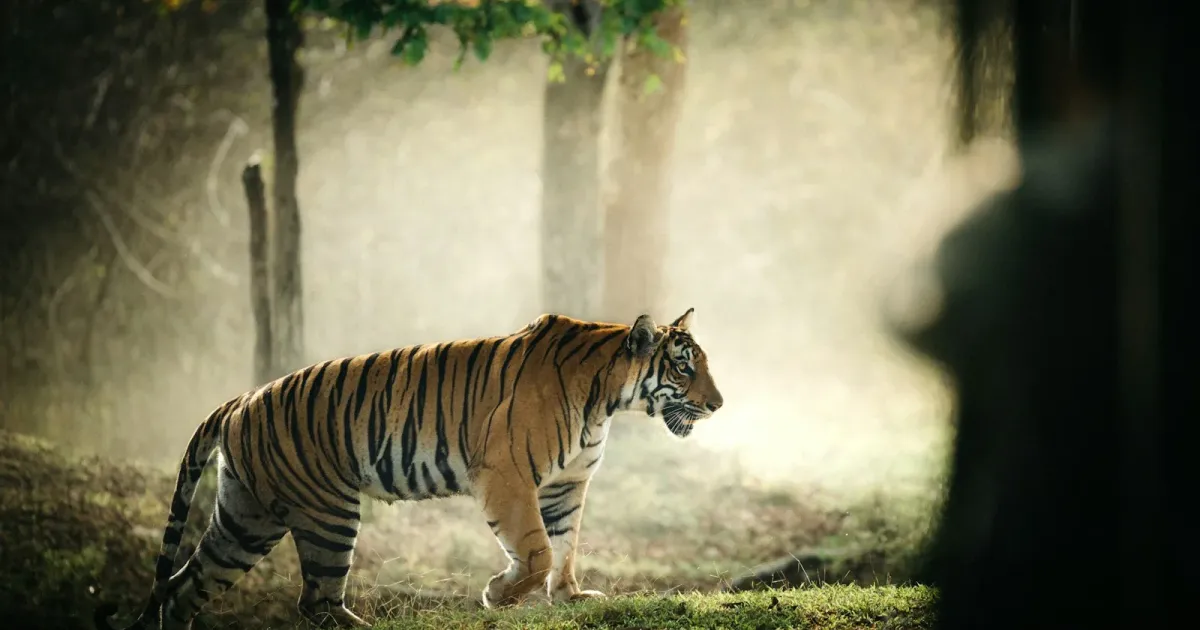
The same big cat hunts in the long, cold winters of the Russian Far East and in the mangrove swamps of the Sundarbans. So where do tigers live today? Only in Asia, and in a much smaller area than they once did.
What ties these places together is food. WWF says the size of a tiger's territory depends on how much prey is around. Below we look at the countries, the habitats and the reasons the map has shrunk.
Quick facts
Tigers have wild populations in 13 range countries and have lost an estimated 95% of their historical range, according to WWF.
The Smithsonian's National Zoo says tigers now occupy just 7% of their historic range.
India's 2022 tiger survey estimated a minimum of 3,167 tigers, more than 70% of the world's wild population (National Tiger Conservation Authority).
Between 480 and 540 Amur tigers live in the Russian Far East and border areas of China, WWF estimates.
The Sundarbans, shared by India and Bangladesh, is the only coastal mangrove tiger habitat in the world, says WWF.
Where do tigers live in the world?
Tigers live in South Asia, Southeast Asia and the Russian Far East, and nowhere else in the wild. The Smithsonian's National Zoo describes their range as running from Russia all the way to Sumatra and mainland Southeast Asia.
WWF lists 13 countries that still have wild tigers. India has by far the most. WWF also names Nepal, Bhutan, Russia and China as countries where tiger numbers are stable or rising.
Tigers have disappeared from some countries, including Cambodia, Laos and Vietnam. That's according to range data summarized on Wikipedia's tiger article. They're also gone from the islands of Java and Bali.
Do tigers live in Africa?
No, there are no wild tigers in Africa. The Smithsonian's National Zoo describes the tiger's historic range as Asia, reaching west only as far as the Caspian Sea region. Lions are the big cat of the African savanna; our post on what lions eat covers how they hunt there.
What kind of habitat do tigers live in?
Tigers live in a wide mix of habitats. WWF lists tropical rainforests, evergreen forests, temperate forests, mangrove swamps, grasslands and savannas. The National Zoo adds that tigers can easily cross rivers and lakes up to 5 miles (8 km) wide.
That last point surprises people who know house cats, because it means tigers swim well. If you've ever wondered why your own cat avoids the bathtub, see why cats hate water.
Here are some of the main places tigers live:
Korean pine and Mongolian oak forests in the Russian Far East
Mangrove swamps of the Sundarbans in India and Bangladesh
The Central Indian Highlands and the Western Ghats
The Shivalik Hills and Gangetic Plains of northern India
The Indonesian island of Sumatra
Do tigers live in the jungle?
Yes, many tigers live in jungle and rainforest. WWF includes tropical rainforests and evergreen forests among tiger habitats. But plenty of tigers live in cold temperate forests, grasslands or mangroves instead, so the jungle is only part of the picture.
Where do tigers live in India?
Tigers in India live in five main regions, according to the National Tiger Conservation Authority's 2022 survey. Camera traps photographed 3,080 individual tigers older than one year, and the survey estimated a minimum population of 3,167.
The photographed tigers were spread across these regions:
Central Indian Highlands and Eastern Ghats: 1,161
Western Ghats: 824
Shivalik Hills and Gangetic Plains: 804
North Eastern Hills and Brahmaputra Plains: 194
Sundarbans: 100
The central Indian region had the most, with Madhya Pradesh and Maharashtra standing out.
Where do Siberian (Amur) tigers live?
Amur tigers, also called Siberian tigers, live mostly in the Sikhote-Alin mountain range of the Russian Far East. WWF says they also live in small pockets near the borders of China and possibly North Korea.
Their home is temperate forest dominated by Korean pine and Mongolian oak. Winters are long, and the sun stays low in the sky. Prey is spread thin in these forests, so Amur tigers have the largest home ranges of any tiger. They have to cover huge distances to find enough to eat.
Amur tigers came close to vanishing. WWF says fewer than 40 were left in the 1940s. By the 1980s there were about 500, and today WWF estimates 480 to 540, around 100 of them cubs. That makes them the largest unfragmented tiger population in the world.
Where do Sumatran tigers live?
Sumatran tigers live only on the Indonesian island of Sumatra. The Smithsonian's National Zoo puts their number at roughly 200 to 400.
WWF now groups tigers into two subspecies: the continental tiger of mainland Asia and the Sunda tiger of the Indonesian islands, which includes the Sumatran tiger.
Why do tigers live where they do?
Tigers live where they can find enough large prey. WWF says the size of a tiger's territory depends on how much prey is available. Tigers mark those territories with urine, feces, scratches on trees, scrapes on the ground and calls.
Because each tiger needs so much room, a healthy tiger population needs a lot of land. WWF estimates that protecting a single tiger means conserving about 24,710 acres of forest. That's why habitat loss hits tigers so hard.
Where did tigers used to live?
Tigers once lived across much of eastern and southern Asia, and parts of central and western Asia too. The National Zoo says their old range reached the Middle East around the Caspian Sea. Today they hold only about 7% of that historic area, and WWF puts the loss at about 95%.
How many tigers are left in the wild?
Estimates range from about 3,900 to roughly 5,600, depending on the source and the year. The Smithsonian's National Zoo gives a figure of only 3,900 wild tigers. WWF cites a newer Global Tiger Forum estimate of about 5,574.
WWF says tiger numbers are stable or rising in India, Nepal, Bhutan, Russia and China. India's camera trap survey is listed by Guinness World Records as the largest camera trap wildlife survey, the National Tiger Conservation Authority notes. Even so, most of the tiger's former range no longer has any tigers.
Other large animals face shrinking homes too. Read about where polar bears live, or about the koala's battle with disease in do koalas have chlamydia. For more wild animal stories, browse our wildlife section.
Frequently asked questions
Where do tigers live?
Tigers live only in Asia, in 13 range countries from the Russian Far East to the Indonesian island of Sumatra. India holds more than 70% of the world's wild tigers.
What habitat do tigers live in?
Tigers live in tropical rainforests, evergreen and temperate forests, mangrove swamps, grasslands and savannas, according to WWF. The size of a tiger's territory depends on how much prey the habitat holds.
Do tigers live in Africa?
No, wild tigers do not live in Africa. The tiger's range is in Asia, from Russia and India down to Sumatra, and its historic range once reached the Caspian Sea region.
Which country has the most tigers?
India has the most wild tigers. India's 2022 national survey estimated at least 3,167 tigers, which is more than 70% of the world's wild tiger population.
Where do Siberian tigers live?
Siberian tigers, also called Amur tigers, live mainly in the Sikhote-Alin mountains of the Russian Far East. Small numbers of Siberian tigers also live near the borders of China and possibly North Korea.
Do tigers live in the jungle?
Many tigers live in jungle and rainforest, which WWF lists among tiger habitats. Other tigers live in cold temperate forests, grasslands or the mangrove swamps of the Sundarbans.
Sources
Tiger, WWF
Amur tiger, WWF
Tiger, Smithsonian's National Zoo and Conservation Biology Institute
Status of tigers, co-predators and prey in India 2022: summary report, National Tiger Conservation Authority
Tiger, Wikipedia



Comments