
Can dogs eat tomatoes? The short answer is yes, but only the ripe red fruit. The ASPCA lists the tomato plant as toxic to dogs, cats and horses, while noting that the ripe fruit itself is non-toxic.
That split sounds confusing until you look at the chemistry. The plant's toxins sit mostly in its green tissue, and they break down as the fruit ripens. So a red cherry tomato and a tomato vine growing in the same garden carry very different risks for a curious dog.
Quick facts
The ASPCA lists the tomato plant as toxic to dogs, cats and horses, and names solanine as the toxic principle (ASPCA).
Immature green tomatoes can contain up to 500 mg of tomatine per kilogram, compared with about 5 mg/kg in red tomatoes (Friedman and colleagues, 2023, Molecules).
Ripe tomatoes contain fiber, potassium, vitamins C and K, and folate (AKC).
PetMD suggests cutting tomatoes into roughly half-inch cubes for dogs (PetMD).
In dogs, eating 15 to 30 grams of raw onion per kilogram of body weight has caused illness (Merck Veterinary Manual).
Why are green tomatoes and tomato plants bad for dogs?
Green tomatoes, leaves and stems are risky because they hold the most tomatine and solanine. Both belong to a group of natural plant chemicals called glycoalkaloids. The ASPCA places tomatoes in the nightshade family, Solanaceae.
The AKC describes solanine and its "cousin" tomatine as toxins found mostly in the green parts of the plant. That includes the leaves, the stems and young fruit that hasn't turned red yet.
A 2023 review in the journal Molecules, led by chemist Mendel Friedman, explains why ripeness matters so much. Tomatine is broken down by the plant's own enzymes as the fruit ripens. The review cites figures of up to 500 mg/kg in immature green fruit and only about 5 mg/kg in fresh red tomatoes. That's roughly a hundredfold drop.
The AKC says the odds of serious poisoning are "incredibly slim" for most dogs. It also warns that small breeds and puppies can be affected by smaller amounts.
What are the symptoms of tomato poisoning in dogs?
Tomatine poisoning usually starts with stomach trouble and can progress to nervous system signs. The AKC lists these possible symptoms:
Vomiting, diarrhea and belly pain
Drooling (hypersalivation) and loss of appetite
Lethargy and muscle weakness
Loss of coordination
Dilated pupils
Tremors or seizures
Abnormal heart rhythm (cardiac arrhythmia)
The ASPCA's list for the tomato plant overlaps, adding depression and a slow heart rate. PetMD notes that eating too much ripe tomato can also cause milder stomach upset, gas or diarrhea. Allergic reactions such as itching, swelling or trouble breathing are uncommon, according to PetMD, but they do happen.
Are ripe tomatoes good for dogs?
Ripe red tomatoes are a low-calorie snack with some useful nutrients, though dogs don't need them. The AKC lists fiber, potassium, vitamins C and K, and folate. PetMD adds vitamin A and the antioxidants lycopene and beta-carotene.
None of this makes tomatoes a must-have. A dog eating a complete commercial diet already gets the vitamins and minerals it needs. Think of a tomato as an occasional treat, the same way you might share a few pieces of watermelon or strawberries.
How can dogs eat tomatoes safely?
Pick a fully ripe red tomato, remove every bit of stem and leaf, wash it and cut it into small pieces. PetMD's steps follow that order, and it suggests cubes about half an inch across.
Keep the amount small. PetMD says treats, tomatoes included, should stay under 10% of a dog's daily calories. Try a piece or two first and watch for any stomach upset before offering more.
Can dogs eat cherry tomatoes?
Yes, dogs can eat ripe cherry tomatoes if they are plain and cut up. Both the AKC and PetMD say ripe cherry tomatoes are fine in small pieces. PetMD warns that a whole cherry tomato is a choking risk for small dogs, so halve or quarter them.
Can dogs eat tomato sauce, ketchup or soup?
No, it's best to keep tomato sauce, ketchup, soup and salsa away from dogs. The tomato isn't the main problem. The other ingredients are.
Pasta sauce and tomato soup often contain onion and garlic, and both the AKC and PetMD flag these. The Merck Veterinary Manual explains why: onion and garlic damage a dog's red blood cells, which can lead to anemia. Cooking and drying don't remove the toxin, and Merck notes that garlic is 3 to 5 times more toxic than onion. Signs often don't show up until several days later, after a lot of red blood cells have been destroyed.
Ketchup brings its own issues. PetMD points out that it contains sugar and salt and may contain xylitol, a sweetener the ASPCA says can cause low blood sugar and liver damage in dogs.
When to call a vet
Call your vet if your dog ate tomato leaves, stems or green tomatoes and shows any sign of illness. Small breeds and puppies deserve extra caution, since the AKC says they can react to smaller amounts.
Contact a vet right away for:
Repeated vomiting or diarrhea
Drooling, weakness or wobbly walking
Tremors or seizures
Tiredness, weakness, fast breathing, yellowish gums or red-tinged urine in the days after eating a sauce with onion or garlic
You can also call the ASPCA Animal Poison Control Center at (888) 426-4435. The ASPCA says the line is open 24 hours a day, every day of the year, and a consultation fee may apply. Have the amount eaten and your dog's weight ready.
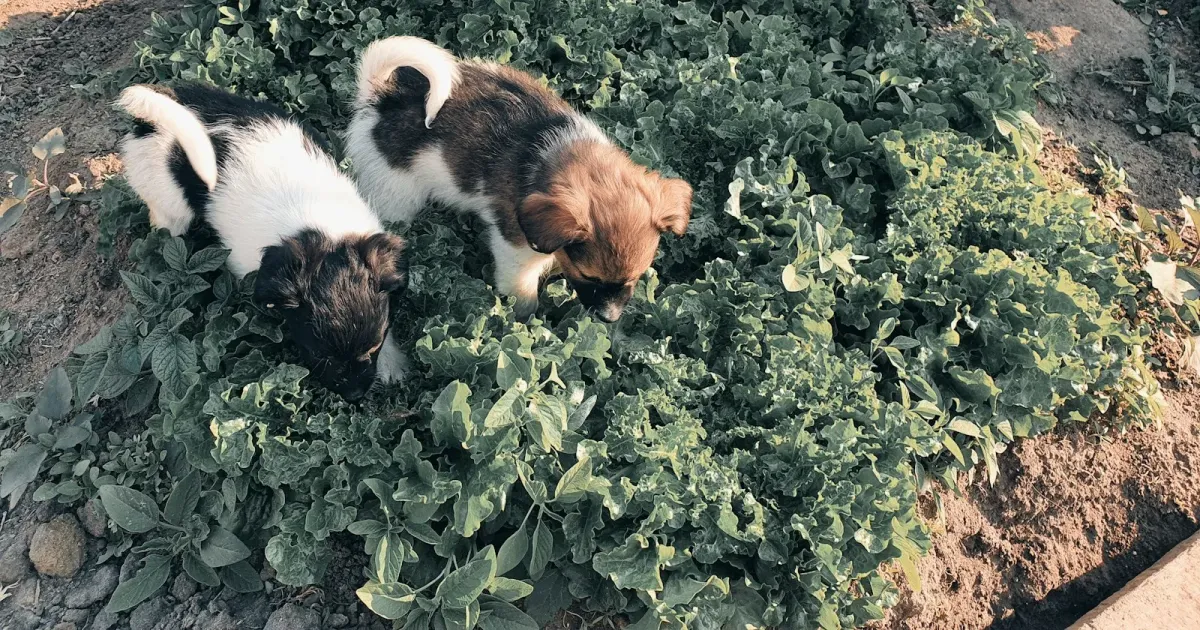
Dogs that graze on garden plants aren't always sick. Some just like to chew greenery, as we cover in why dogs eat grass. A tomato patch is a riskier place for that habit than a lawn.
Frequently asked questions
Can dogs have tomatoes every day?
Dogs can have small pieces of ripe tomato, but daily servings aren't needed. PetMD recommends keeping all treats, tomatoes included, under 10% of a dog's daily calories.
Are cherry tomatoes safe for dogs?
Ripe cherry tomatoes are safe for dogs when plain and cut into small pieces, according to the AKC and PetMD. A whole cherry tomato can be a choking risk for a small dog.
Can dogs eat cooked tomatoes?
Plain cooked ripe tomatoes don't contain the risky green parts, but most cooked tomato dishes contain onion, garlic, salt or spices. The Merck Veterinary Manual notes that cooking does not make onion and garlic safe for dogs.
Are tomato plants poisonous to dogs?
Yes, the ASPCA lists the tomato plant as toxic to dogs because of solanine. The leaves, stems and green fruit carry the highest levels of toxins, so fence off tomato gardens.
What happens if a dog eats a green tomato?
A dog that eats a green tomato may develop vomiting, diarrhea, drooling or weakness from tomatine. The AKC says serious poisoning is unlikely in most dogs, but small breeds and puppies are at higher risk, so call a vet if signs appear.
Can dogs eat ketchup?
Dogs should not eat ketchup. PetMD notes that ketchup contains sugar and salt and may contain xylitol, which the ASPCA says can cause dangerously low blood sugar in dogs.
For more fruit and veggie guides, see can dogs eat apples and the rest of our dogs section.
Sources
Tomato Plant, ASPCA Animal Poison Control
Can Dogs Eat Tomatoes?, American Kennel Club
Can Dogs Eat Tomatoes? Benefits, Risks, and Feeding Tips, PetMD (reviewed by Sandra C. Mitchell, DVM)
Isomers of the Tomato Glycoalkaloids α-Tomatine and Dehydrotomatine: Relationship to Health Benefits, Molecules (2023)
Garlic and Onion (Allium spp) Toxicosis in Animals, Merck Veterinary Manual
ASPCA Animal Poison Control, ASPCA



Comments