
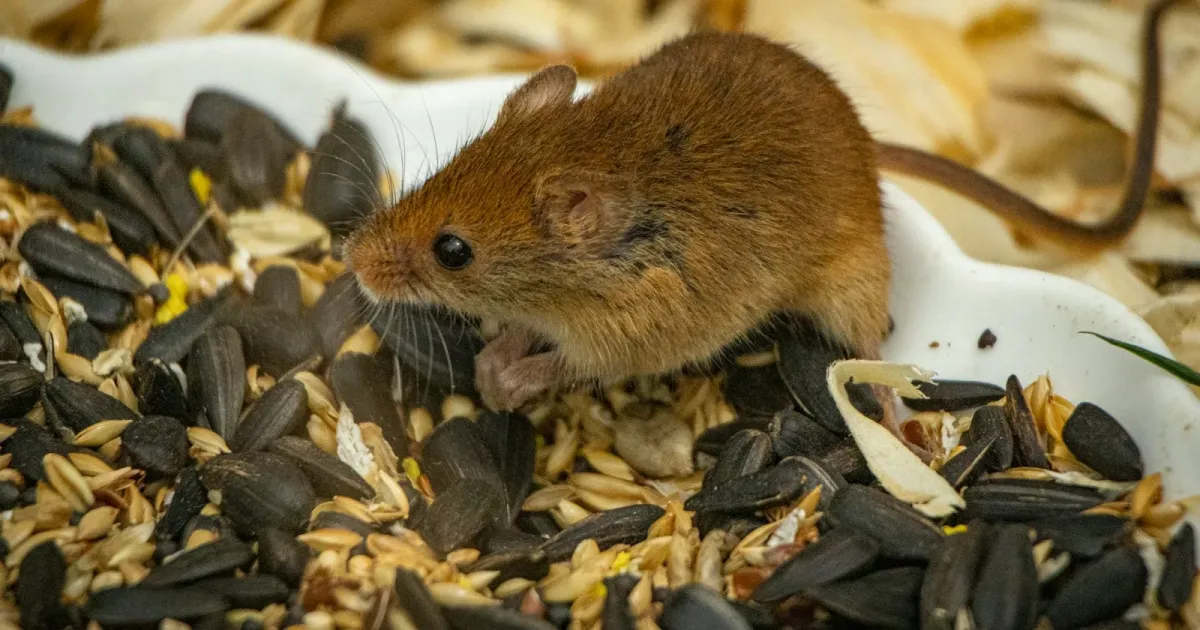
Mice have a reputation as cheese lovers. The real mouse menu is much more about seeds and grain. A field mouse spends its nights gathering seeds, nuts and insects, and a house mouse raids the pantry for cereal.
So what do mice eat, and why do they snack the way they do? Here's what pest experts, wildlife agencies and animal welfare groups say about wild mice, mice in your house and pet mice in a cage.
Quick facts
House mice eat up to 20% of their body weight a day, in about 200 small meals each night (UC IPM).
Mice prefer seeds and cereal grains but like fatty, protein-rich foods such as nuts, bacon, butter and sweets (University of Kentucky Entomology).
House mice usually forage no more than 10 to 25 feet from their nest, the University of Kentucky says.
A deer mouse can stash as much as a pint of food for later (Missouri Department of Conservation).
The RSPCA warns that grapes, raisins and rhubarb are toxic to pet mice.
What do mice eat in the wild?
Wild mice eat seeds, grains, nuts, fruit and insects. Most are omnivores, which means they eat both plants and animals, and they take whatever is in season.
The deer mouse is a good example. The Missouri Department of Conservation (MDC) lists beetles, moth and butterfly caterpillars, nuts, wild seeds, corn, soybeans, fruits and fruit pits. Deer mice also sometimes eat fungi, snails, worms and bird eggs.
House mice in fields eat much the same kinds of things. The UC Statewide IPM Program (UC IPM) says house mice eat whatever food is available, including cereals, grasses, roots, seeds and even insect larvae. Britannica notes that house mice, native to Eurasia, have spread worldwide with people and tend to move into farm fields, where grain is easy to find.
Why do mice eat so many tiny meals?
Mice eat many tiny meals because they're nibblers that stay close to home. A small body and a small territory suit a snack-all-night style.
UC IPM says house mice eat up to 20% of their body weight each day, spread across about 200 small meals a night. The University of Kentucky describes the same habit another way: a mouse may visit 20 to 30 different food spots in one night.
Those spots are close together. Kentucky's entomologists say mice usually forage within 10 to 25 feet of their nest, and when food and shelter are good, only a few feet. That's very different from rats, which travel farther. Our guide to rats vs mice covers more of those differences.
Mice don't always eat where they find food, either. UC IPM says they often carry food off to eat somewhere more secluded. For a small prey animal, eating out of sight makes sense.
How do wild mice store food?
Many wild mice store food in hidden caches to eat later. This is called caching.
The MDC says deer mice can store as much as a pint of food in underground holes, old bird nests or trees. They carry it in cheek pouches that hold about a teaspoon of seeds at a time. Squirrels are famous for the same habit, as we explain in what squirrels eat.
What do house mice eat in your home?
House mice in your home eat stored grains, cereals and seeds first, then anything fatty or sweet. They aren't picky.
The University of Kentucky says mice eat a wide variety of foods but prefer seeds and cereal grains. They're also drawn to foods high in fat and protein, like nuts, bacon, butter and sweets. Stored cereals and grains in a kitchen fit that list neatly.
The bigger problem is contamination. UC IPM says mice chew through storage containers and leave droppings in food, making it unsafe to eat. Because mice can live on very small amounts of food, Kentucky notes that cleaning up alone won't get rid of an established infestation.
Do mice really like cheese?
Mice will eat cheese, but none of the pest or welfare sources we checked list it as a favorite. The foods they name are seeds, grains and high-fat items like nuts and butter.
Kentucky's list of good trap baits doesn't include cheese at all. UC IPM calls peanut butter a popular bait choice. So if you're setting a trap, the experts point to peanut butter, nuts or a sweet. Peanut butter comes up for cats too, in our post on whether cats can have peanut butter.
Do mice need water?
House mice can survive without drinking water, but pet mice need it at all times. House mice can get enough moisture from their food.
UC IPM says house mice don't need to drink to survive. They will look for liquids if their food is too dry or they live somewhere hot or dry. Pet mice are a different story. The RSPCA says pet mice need constant access to clean water and can die quickly without it.
What do pet mice eat?
Pet mice should eat a complete commercial mouse food, ideally nuggets, with a little fresh fruit and vegetables. The RSPCA sets out a simple plan.
Commercial mouse nuggets as the main diet
Small amounts of fruit and vegetables, taken out of the daily food allowance (not added on top)
Some of the daily food scattered around the cage so the mice forage
Fresh water from a bottle with a metal sipper tube, checked daily for leaks
The RSPCA recommends nuggets because they provide complete nutrition, so treats and fresh foods should stay a small part of the day's food.
The RSPCA also lists foods to skip. Grapes, raisins and rhubarb are toxic to mice, and lettuce can upset their digestion. Note that raisins are fine as trap bait for wild mice but not as food for pets.
Other small pets have their own diet quirks. See how long hamsters live, or read about the odd behavior behind why hamsters eat their babies.
Frequently asked questions
What do mice eat?
Mice eat mostly seeds and cereal grains, plus grasses, roots, nuts, fruit and insects. House mice also like foods high in fat and protein, such as nuts, bacon, butter and sweets.
What do field mice eat?
Field mice such as the deer mouse eat insects, nuts, wild seeds, corn, soybeans, fruits and fruit pits. Deer mice sometimes also eat fungi, snails, worms and bird eggs, according to the Missouri Department of Conservation.
What is a mouse's favorite food?
A mouse's favorite foods are seeds and cereal grains, according to the University of Kentucky. Mice are also strongly drawn to fatty, protein-rich foods like nuts, bacon and butter.
Do mice eat cheese?
Mice can eat cheese, but cheese is not one of the foods pest experts list as a mouse favorite. Peanut butter, nuts, bacon and sweets are the baits experts recommend instead.
What should you feed a pet mouse?
A pet mouse should eat commercial mouse nuggets, with small amounts of fruit and vegetables taken from its daily food allowance. The RSPCA says pet mice also need constant access to clean water.
What foods are toxic to mice?
Grapes, raisins and rhubarb are toxic to mice, according to the RSPCA. The RSPCA also advises against feeding lettuce to pet mice because it can upset their digestion.
Find more care and behavior guides in our small pets section.
Sources
House Mouse, UC Statewide IPM Program (N.M. Quinn and M. Frye)
Control of Mice, University of Kentucky Entomology
Deer Mouse, Missouri Department of Conservation
Mice diet, RSPCA
House mouse, Encyclopaedia Britannica



Comments